
We’re a finalist in the 2026 School Travel Awards! We’d love your vote.

Vote now

Travelling to Spain with Passengers Who Have Invisible Disabilities

Last updated: Jun 16th, 2026


Travelling to Spain with Passengers Who Have Invisible Disabilities

Whether travelling as part of a school trip, concert tour or organised group, airports can sometimes be challenging environments for passengers with invisible disabilities. Busy terminals, long queues, unfamiliar procedures and sensory overload can be difficult for individuals with conditions such as autism, ADHD, anxiety, learning disabilities, sensory processing difficulties or other hidden disabilities.

If you’re travelling to Spain, there’s an important change that group leaders, teachers, parents, carers and travellers should be aware of.

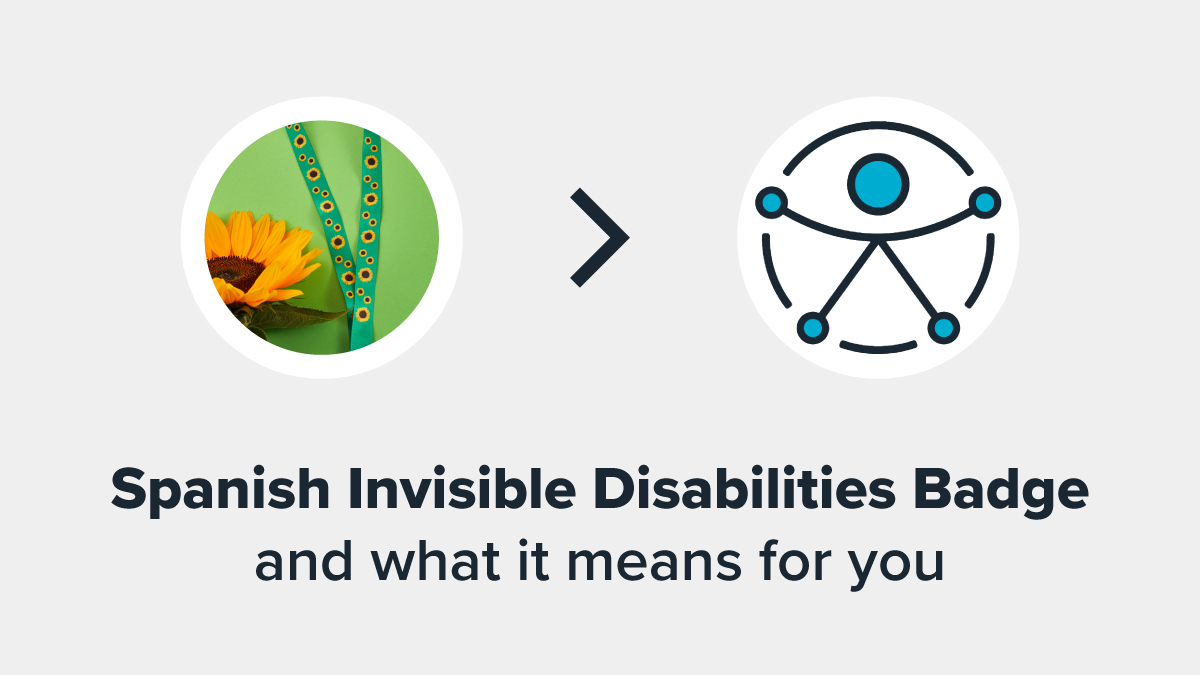
The Sunflower Lanyard Is No Longer Recognised at Spanish Airports

Many UK travellers are familiar with the Hidden Disabilities Sunflower Lanyard, which is recognised across many UK airports and public spaces. However, airports operated by Aena in Spain now use their own Invisible Disabilities Badge scheme instead.

This means passengers who normally travel with a Sunflower Lanyard may not receive the same recognition or support at Spanish airports. Groups and individual travellers should therefore consider applying for the Aena badge before travelling.

What Is the Aena Invisible Disabilities Badge?

The badge is designed to discreetly identify passengers who may need additional understanding, patience or support while travelling through the airport.

It can be requested online up to 48 hours before departure and is available free of charge. Once issued, it can be displayed on a mobile device or printed and carried during travel.

Passengers showing the badge can access the airport’s security checkpoint designated for families and persons with reduced mobility (PRMs). Where a dedicated lane is not available, airport staff will endeavour to facilitate access through the general security checkpoint as smoothly as possible.

Additional Support at Spanish Airports

Several Spanish airports have introduced facilities to create a more comfortable experience for passengers with invisible disabilities, including:

  • Quiet spaces and silent lounges
  • Sensory rooms for passengers with autism and sensory sensitivities
  • Dedicated security lanes at some airports
  • Staff trained to recognise and support passengers with hidden disabilities

These initiatives can help reduce stress and make the airport experience more manageable for travellers who may benefit from additional support.f

Tips for Group Leaders and Teachers

Before travelling, consider:

  • Discussing individual support requirements with parents, carers or travellers
  • Sharing airport procedures and travel plans in advance
  • Allowing extra time for airport processes
  • Ensuring group leaders are aware of anyone who may benefit from additional support
  • Encouraging travellers to apply for the Aena Invisible Disabilities Badge where appropriate

Helping Everyone Travel with Confidence

A little preparation can make a big difference. Understanding the Aena Invisible Disabilities Badge scheme can help ensure that travellers with hidden disabilities can access the support available and enjoy a smoother start to their journey.

Top tip: If any members of your group currently use a Sunflower Lanyard, check whether they would benefit from applying for the Aena Invisible Disabilities Badge before departure, as the Sunflower scheme is no longer recognised at Aena-operated airports.

Graphic of plane outline
Want To Find Out More?

Looking for more travel advice? Whether you’re inquiring about the new EES system or looking for what destinations are best for educational trips, our award-winning team is here to help!

Get in touch today.

Contact us