We’re celebrating, having won the School Travel Awards – Best Large School Tour Operator award!

What Are the 21 Spanish-Speaking Countries? A Complete Guide

Last updated: Jul 20th, 2026


Spanish is one of the world’s most widely spoken languages, connecting people across Europe, North America, Central America, South America, the Caribbean and Africa. With around 500 million native speakers worldwide, it’s no surprise that so many students choose to learn Spanish as a second language. 

In this guide, we’ll explore where Spanish is spoken around the world, including the 21 Spanish-speaking countries, and how the language varies between regions. We’ll also explain why a school language trip to Spain is a popular tour for students looking to improve their Spanish skills. 


Where Is Spanish Spoken? 

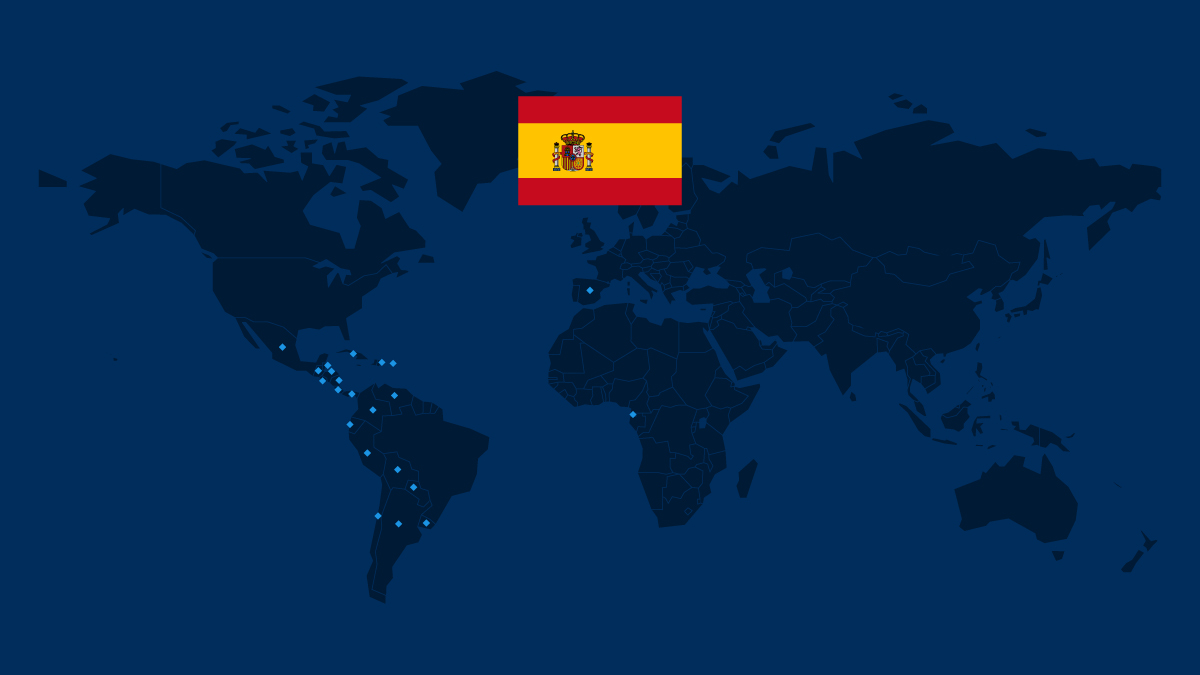
Spanish is the official language in 20 sovereign countries, as well as Puerto Rico, a self-governing territory of the United States where Spanish is also an official language. Together, these make up the 21 countries that speak Spanish commonly referenced in educational resources. 

  • Spain 
  • Mexico 
  • Guatemala 
  • Honduras 
  • El Salvador 
  • Nicaragua 
  • Costa Rica 
  • Panama  
  • Cuba  
  • Dominican Republic 
  • Argentina 
  • Bolivia 
  • Chile 
  • Colombia 
  • Paraguay 
  • Peru 
  • Venezuela 
  • Equatorial Guinea 
  • Ecuador 
  • Uruguay 
  • Puerto Rico* 

*Puerto Rico is a territory of the United States rather than an independent country, but Spanish is an official language and is spoken by the vast majority of the population. 

The majority of countries where Spanish is spoken are found in Latin America, stretching from Mexico through Central America and across much of South America. Spanish is also the official language of Spain in Europe and Equatorial Guinea in Africa, making it one of the few languages spoken officially across multiple continents. 

Because Spanish is so widespread, learning it opens the door to communicating with millions of people around the world, whether you’re travelling, studying or building a future career. 


Do All Spanish-Speaking Countries Speak the Same Spanish? 

Although Spanish speakers can generally understand one another, every country has its own accent, expressions and vocabulary. 

For example: 

  • In Spain, you’ll hear Castilian Spanish, which uses the distinctive pronunciation of letters such as z and soft c. 
  • In Mexico, vocabulary differs for many everyday items, and pronunciation is often slower and clearer. 
  • In Argentina and Uruguay, people commonly use vos instead of tú when addressing someone informally. 
  • Across Latin America, you’ll find regional slang, local expressions and unique cultural influences that shape the language. 

These differences are similar to the variations between British English, American English and Australian English. While each has its own characteristics, speakers can still communicate with one another.


Which Country Has the Most Spanish Speakers? 

Mexico is home to the largest population of native Spanish speakers in the world, with well over 120 million people speaking the language. 

Other countries with large Spanish-speaking populations include: 

  • Colombia 
  • Spain 
  • Argentina 
  • Peru 
  • Venezuela 

The global reach of Spanish makes it one of the most valuable languages to learn for travel, education and future employment.


School Language Trip to Seville


Why Do Students Choose Spain to Learn Spanish? 

Although Spanish is spoken across many countries, Spain continues to be one of the most popular destinations for school language trips. 

For school groups, Spain offers the perfect combination of language learning, culture and educational experiences. 

Learn Through Total Immersion 

The fastest way to improve your Spanish is to use it every day. During a language trip, students practice speaking in real-life situations. For example, ordering food, asking for directions, shopping and interacting with local people help build confidence far beyond the classroom. 

Experience Spanish Culture First-Hand 

Learning a language is about more than vocabulary and grammar. Students can discover Spain’s traditions, festivals, cuisine and history while experiencing everyday life in a Spanish-speaking environment. 

European Spanish 

Students studying in Spain learn European Spanish, often referred to as Castilian Spanish. This provides a strong foundation for understanding the language while making it easy to communicate with Spanish speakers around the world. 

Educational Cities 

Spain offers a variety of destinations that combine language learning with unforgettable cultural experiences. Whether exploring the vibrant streets of Barcelona. historic streets, world-famous museums in Madrid, or the beautiful coastline of Malaga, students can continue practicing their Spanish beyond the classroom every day. 
 

School Language Trip to Seville


Why Is a Language Trip One of the Best Ways to Learn Spanish? 

While classroom lessons provide important foundations, using Spanish in real-life situations helps students develop fluency and confidence much more quickly. 

Language trips allow students to: 

  • Build confidence speaking with native speakers. 
  • Improve listening skills through daily conversations. 
  • Experience Spanish culture beyond textbooks. 
  • Learn independently in authentic situations. 
  • Create unforgettable memories while developing valuable language skills. 

For many students, learning abroad transforms Spanish from a school subject into a living language they use every day.

Ready to Get the Conversation Started?

Transform classroom learning into real-world confidence with a Spanish language trip to Spain. Through immersive experiences, students develop their language skills, discover a new culture and create unforgettable memories along the way. 

Get in touch with our expert team today and let’s start planning an unforgettable language experience. 

Contact us

Related Articles

A Guide to Spanish, French, and German Slang and Dialects

When embarking on a school language trip, it’s important that your students can immerse themselves in the local language – whether it be French, Spanish,…

View or the Eiffel Tower

Combine Language Trips with Cross-Curricular Learning!

Did you know? Our school language trips can be combined with subjects like history, art, and geography – this is the BEST choice to make,…

School Language Trip to Seville

Do School Language Trips Really Improve Language Skills?

In this blog, we discover how school language trips improve language skills and help students understand culture outside the classroom.