We’re celebrating, having won the School Travel Awards – Best Large School Tour Operator award!

School Travel Club: Open Up the World to Our Students

Last updated: Sep 28th, 2026


Sometimes the biggest journeys start with a very small idea. A map on a classroom wall. A few students meeting at lunchtime. Someone pointing at Iceland and saying, ‘I’d love to go there.’ Someone else chooses Morocco. Then Japan. Italy. New York. India. Before long, you have the beginnings of a School Travel Club. I think every school should have one.

Encourage Curiosity

For me, educational travel has never simply been about getting on a coach, boarding an aircraft and ticking another country off a list. Travel should make young people curious. It should introduce them to different cultures, landscapes and ways of living. It should build confidence and encourage them to look beyond the familiar.

That is something I have seen repeatedly through my work as a geographer and through travelling with Rayburn Tours. The destination matters, of course. But what happens to young people along the way matters even more. Start with the map. You don’t need a complicated constitution, committee or twelve-page development plan.

Start With a Map

You don’t need a complicated constitution, committee or twelve-page development plan.

Put a large world map on the classroom wall and ask one question: If you could go anywhere in the world, where would you go? Then ask why.

A student might choose Iceland because they want to see a volcano. Someone might choose Japan because of its culture and technology. Another might want to experience the markets of Marrakech. One student may be fascinated by wildlife in Kenya.

Someone will inevitably choose Italy because they like pizza. Perfectly reasonable.

What you are doing is creating curiosity. The students are no longer simply looking at countries on a map. They are beginning to imagine landscapes, people and experiences… and that is where travel begins.
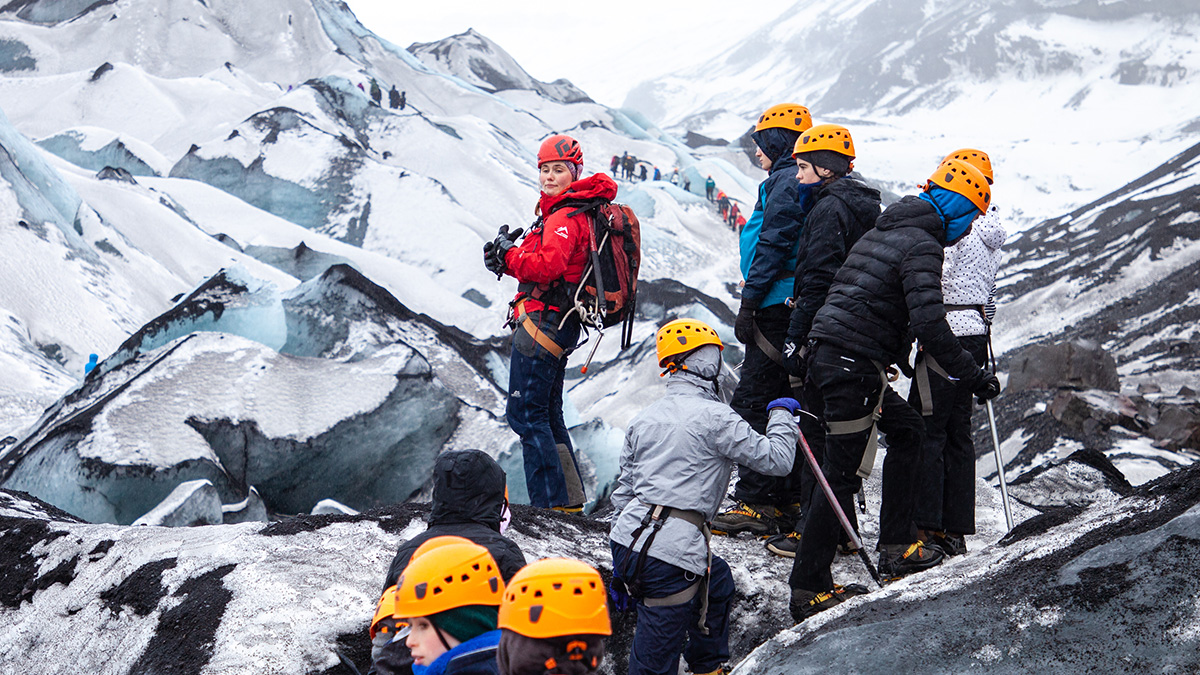
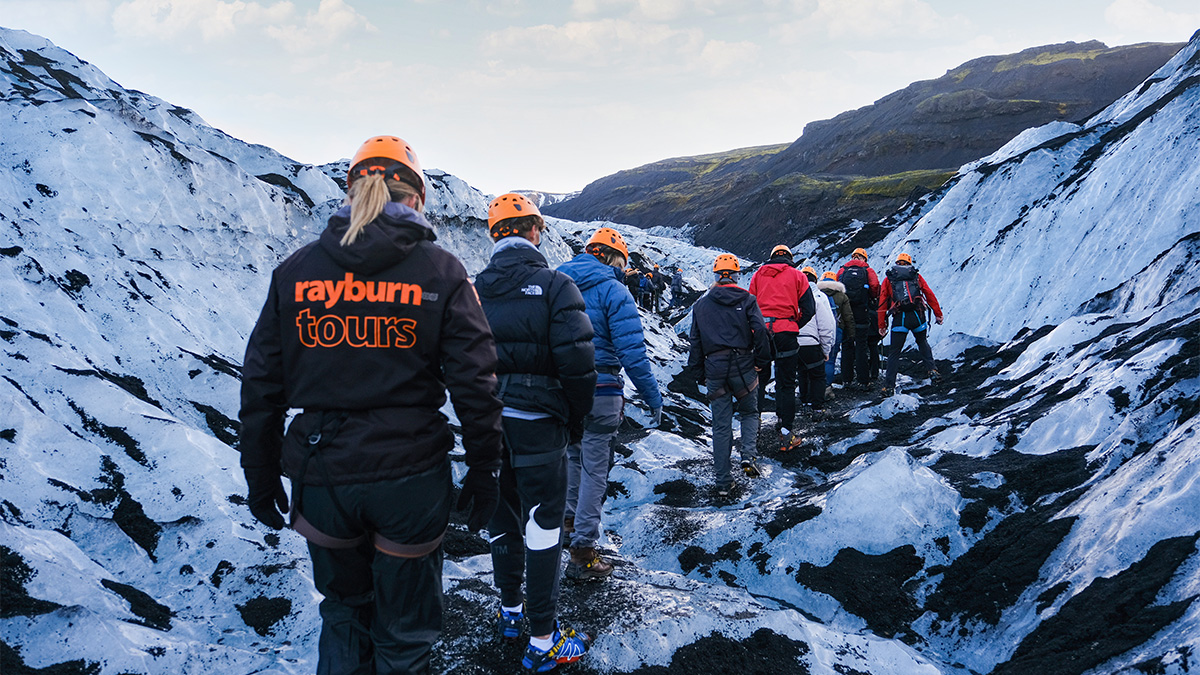
Students on a glacier trek in Iceland

Let Students Shape the Club

Give it a name. Let them design a logo and create a noticeboard. Encourage them to bring in photographs, tickets, postcards and stories from places they have visited.

Make the club feel different from another lesson… and provide biscuits. After many years in education, I remain convinced that biscuits can significantly improve student participation.

Travel Without Leaving School

A school travel club doesn’t need to be permanently heading for an airport. In fact, much of the fun can happen before anyone goes anywhere.

Take one country and explore it for a meeting. Imagine Morocco. Where is it? What languages are spoken? Why are mint tea and hospitality so important? What is a souk? What happens when you hear the call to prayer? Why might you dress or behave differently when visiting a religious building?

Move to Iceland the following month. Volcanoes, glaciers, geothermal swimming pools and houses heated by energy from beneath the ground… and so on. Suddenly the club isn’t just about holidays. It becomes a place to explore global citizenship.

Young people begin to recognise something quite important: their normal isn’t everybody else’s normal. That is a valuable lesson. Good travel encourages you to look at another culture with curiosity rather than judgement.

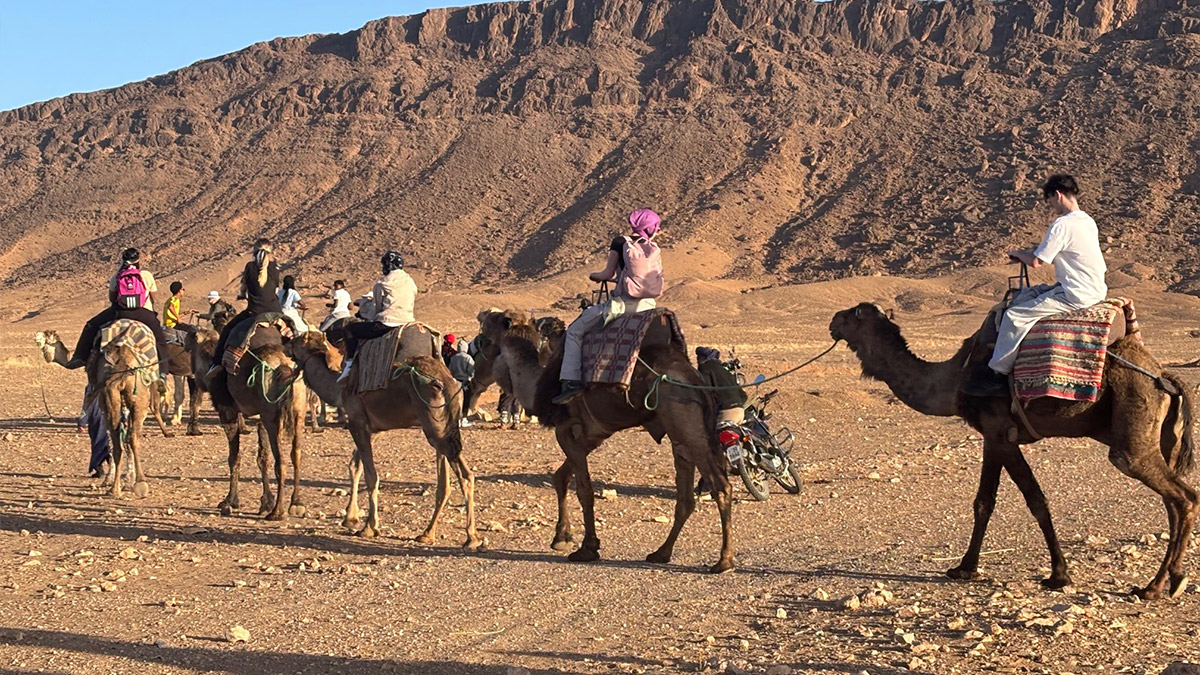
Students riding camels in Morocco

You Don’t Have to Go Abroad

There is also a tendency to think that ‘travel’ means going abroad. It doesn’t. Some of the best travel experiences can begin twenty miles from school.

Take a train to a town students have never explored. Catch a ferry. Visit a museum, castle, mosque, cathedral or temple. Walk along a coastline. Explore a community shaped by migration. Give students some responsibility. Ask them to plan the journey.

How will we get there? What will it cost? Where will we eat? What are we going to see? When is the last train home?

Students discover that journeys require decisions.

Create Travellers, Not Tourists

This is perhaps the part I like most. A tourist looks. A traveller notices.

Why is that glacier retreating? How has migration changed this neighbourhood? What do local people think about visitors?

Those are geographical questions, but they are also questions about people.

When travelling with students, I have often found that the most memorable moments aren’t necessarily the famous attractions. They are the unexpected ones. Trying to order something when you don’t speak the language. Talking to a fisherman. Standing in a market surrounded by unfamiliar smells and sounds. Watching someone make bread. Hearing the call to prayer. Looking across an Icelandic landscape and realising that the ground beneath your feet is still changing.

These moments make geography real.

Take Learning Into the Real World

You can teach glaciation from a diagram. You can explain urbanisation with statistics. You can discuss culture from a textbook. But standing in the landscape is different.

That is why organisations such as Rayburn place such importance on real-world educational experiences. A well-planned school journey connects classroom learning with places, people and experiences that students remember.

The real journey is personal.

The Confidence to Explore

There is another side to travel that we sometimes underestimate… Confidence.

For one student, a school journey may be their first flight. For another, their first passport. Their first night away from home. Their first time managing their own money. Their first conversation with somebody from another country. Or even their first attempt to survive several days without constant access to Wi-Fi.

They learn to be on time. They share rooms. They cope when plans change. They look after each other. They discover that they can manage unfamiliar situations.

These things don’t appear neatly on an exam specification. But they matter. Educational travel can help young people become more independent, adaptable and open-minded.

From Travel Club to School Trip

Eventually, your School Travel Club might begin planning something bigger.

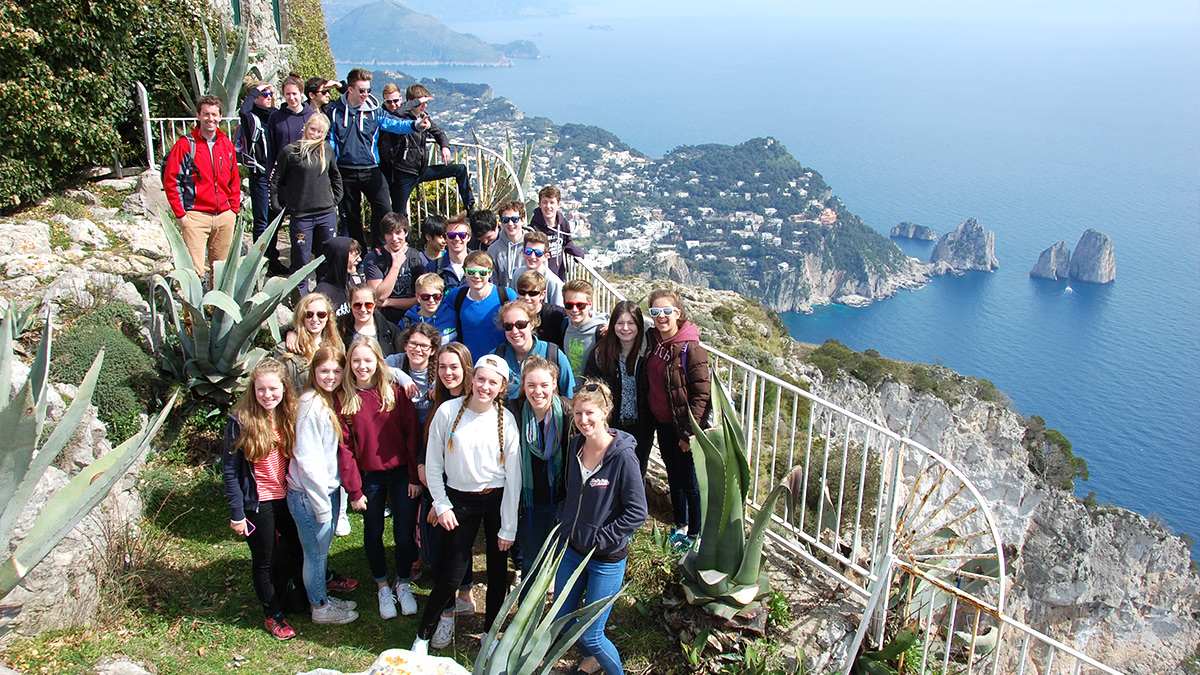
Iceland for Geography. Kraków for History. France or Spain for Languages. Morocco for culture and global citizenship. Italy for art, history and food.

There will obviously be permissions, safeguarding, budgets, insurance, risk assessments and paperwork. That’s part of organising any school visit, and working with an experienced educational travel company such as Rayburn can make turning an idea into a realistic journey considerably easier.

Author

Ian Geddes

Field Study Tutor


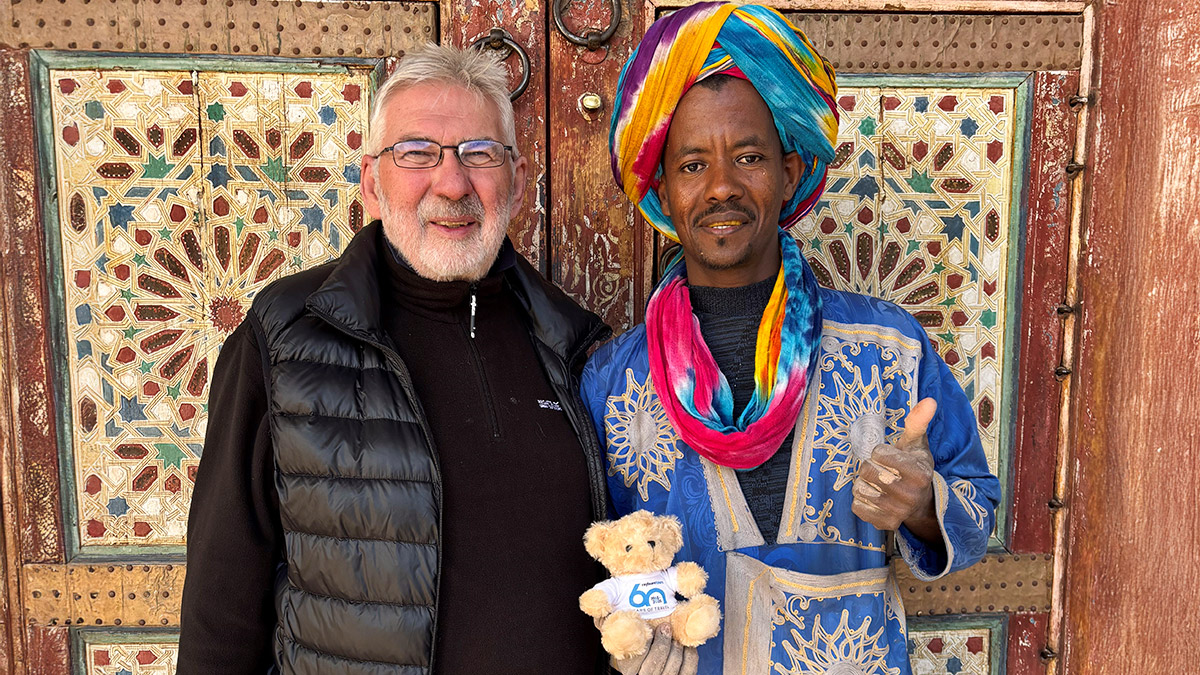
Glaswegian Ian Geddes has been a Field Study Tutor with Rayburn Tours since 2011 and specialises in Iceland and Morrocco. In that time, he’s completed almost 80 trips!

He’s taught for decades. Lectured. Been involved in the Scottish exam system. Authored the course textbook for higher geography in Scotland. He also brings barrels of fun and learning to the classes he leads while on tour.

Mixing laughs with a vast back catalogue of educational content, Ian quickly dispels any teacher-student relationship with classes on tour so he can educate on a more informal level.