1. Parthenon
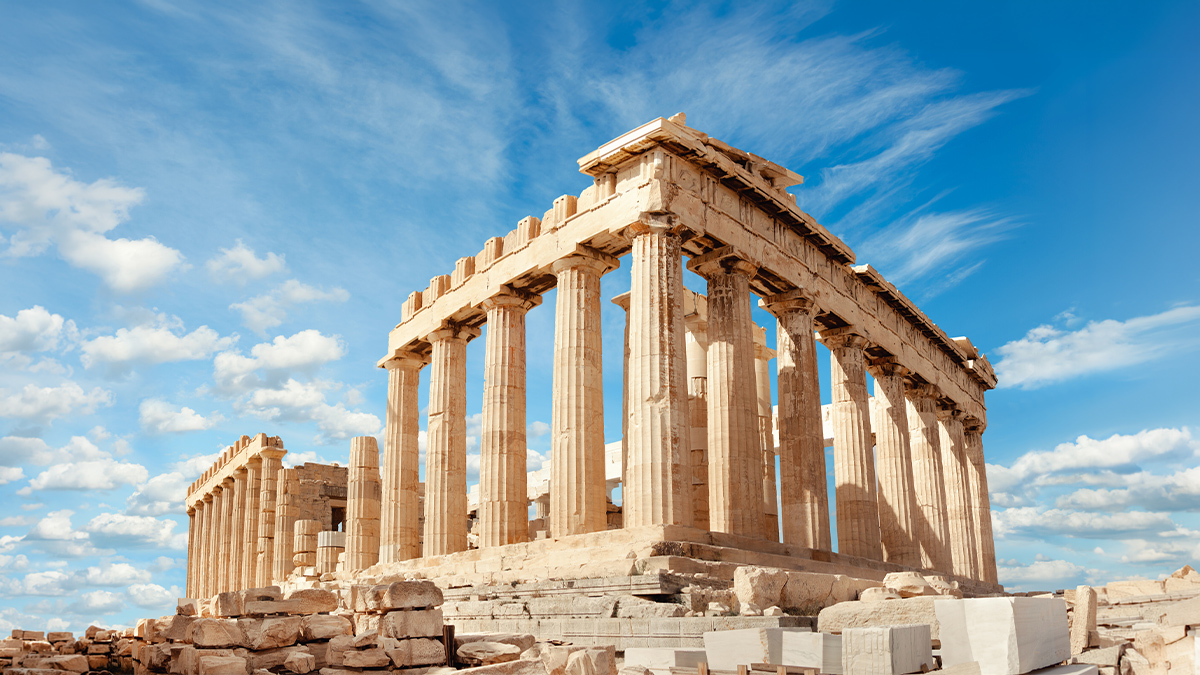
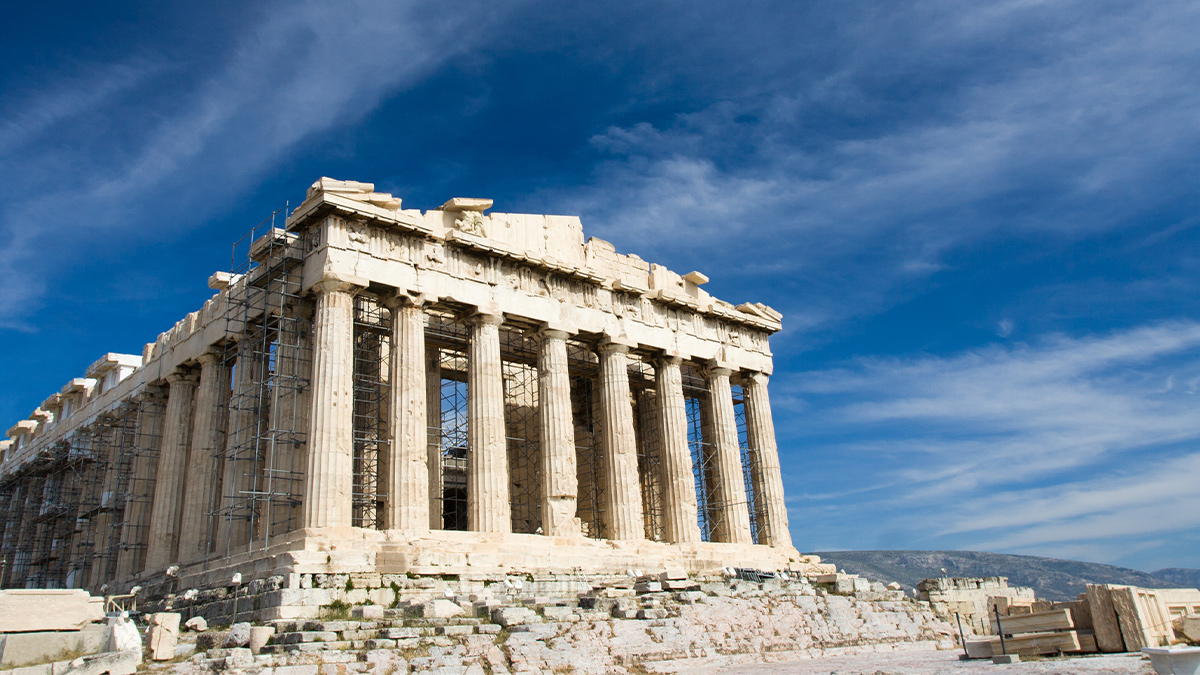
First on our list of Greece historical sites is the magnificent Parthenon. Built between 447 and 432 BC, this structure, dedicated to Athena, goddess of wisdom, craftsmanship and strategic warfare, the Parthenon is one of the most striking symbols of classical Greek architecture and Western civilisation, Athenian power and democracy. Its magnificence is further highlighted by being the largest temple constructed on the Acropolis, an ancient, rocky hilltop that overlooks the city.
As students marvel at the Parthenon, they can explore how Greece became the birthplace of philosophy and democracy. As they discover the most influential philosophers at the time, from Socrates to Plato and Aristotle, students can trace the roots of ideas about citizenship and community, governance, ethics and ways of thinking that continue to shape societies around the world today. It’s an opportunity for young people to develop their critical thinking skills as they wander through the ancient ruin, examining how society has changed and evolved to the present day.