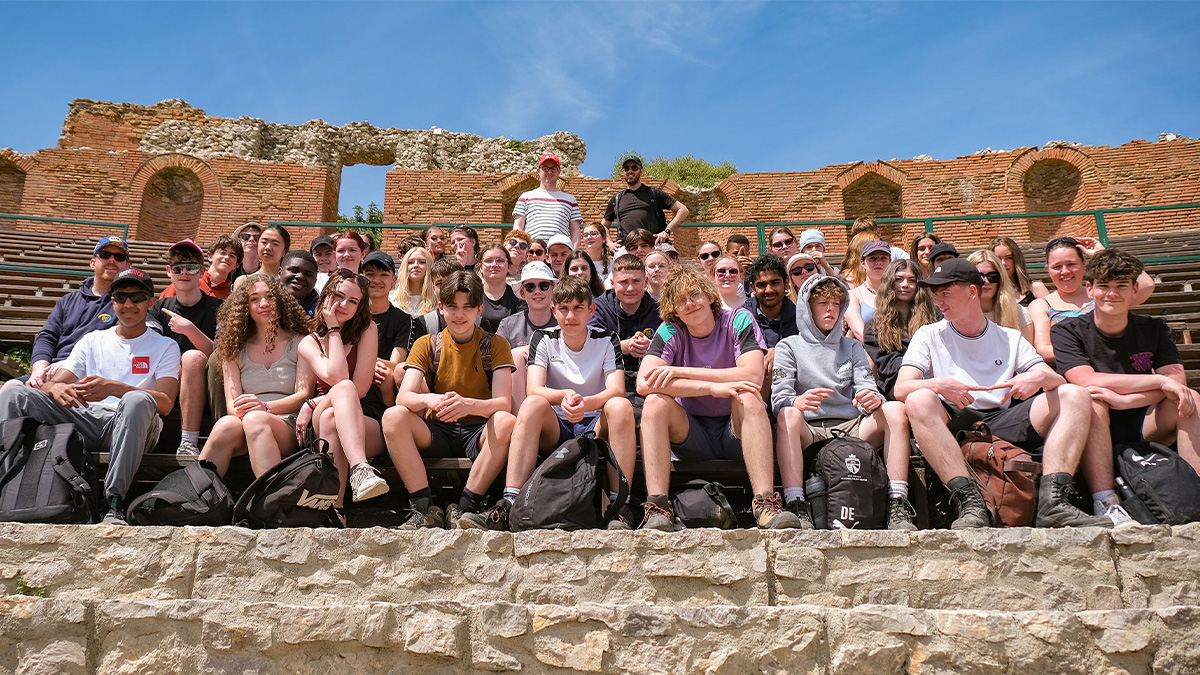
We’re celebrating, having won the School Travel Awards – Best Large School Tour Operator award!

Wintry Wonders: Exploring the World’s Physical Geography

Last updated: Nov 19th, 2026


There’s something magical about wintry landscapes. Think towering mountains dusted with snow and enormous glaciers stretching across the horizon.

From investigating glacial erosion in Iceland to exploring volcanic hazards in Sicily, geography school trips help students connect their GCSE learning with the world around them.

So, as the festive season approaches, we’re exploring four geographical environments that deserve a place on every geography department’s Christmas wish list!

1. Glacial Landscapes

Few geographical forces have transformed our planet quite like glaciers. Over thousands of years, these enormous masses of moving ice have carved through mountains, reshaped valleys and transported vast quantities of rock and sediment.

For GCSE geography students studying glacial landscapes, there’s nothing quite like seeing these features first-hand. Imagine standing in front of an enormous glacier, surrounded by towering peaks and dramatic valleys. Students can identify evidence of glacial erosion in the landscape around them, from classic U-shaped valleys and corries to arêtes and hanging valleys.

There’s plenty to explore beyond the landforms, too. Glacial environments provide an excellent opportunity to investigate climate change, glacial retreat and the environmental consequences of rising temperatures.

Where to go for glacial geographical discovery?

  • Switzerland – Discover the spectacular Swiss Alps, where glaciers, valleys and towering peaks reveal the power of glaciation.
  • Norway – Explore dramatic fjords and steep-sided valleys carved by glaciers.
  • Iceland – Get closer to impressive glaciers and investigate how ice continues to shape this remarkable landscape.

Don't just take our word for it!

?>

Absolutely loved this years tour! Students and staff all loved the glacier hike, it was definitely a highlight of our tour.

Rebecca Sullivan, Welland Park Academy, Geography trip to Iceland

2. Tectonic Hazards

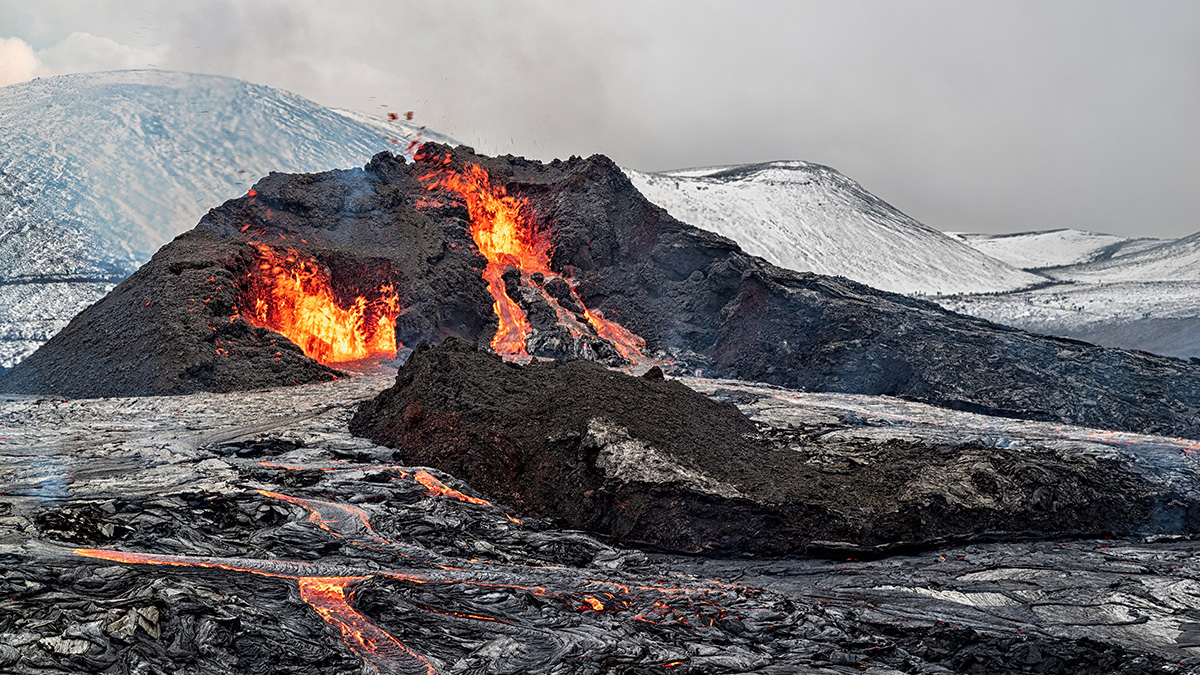
Not every geographical wonder is created by cold temperatures. Some of the world’s most fascinating landscapes are shaped by the immense heat and energy beneath the Earth’s surface. For students studying tectonic hazards, destinations such as Iceland and Sicily offer incredible opportunities to explore earthquakes, volcanic eruptions and the formation of new landscapes.

Take Iceland, for example. Situated on the boundary between the North American and Eurasian tectonic plates, it’s a fantastic location for investigating divergent plate boundaries and volcanic activity. Students can explore geothermal features, discover evidence of volcanic processes and see how tectonic activity continues to shape the island.

Then there’s Sicily, home to Mount Etna. Here, students can investigate volcanic landforms, consider the impacts of eruptions and explore the challenges faced by communities living alongside active volcanoes.

There’s plenty of opportunity to connect physical and human geography, too. How do communities prepare for volcanic eruptions? How are hazards monitored? And what challenges do emergency services face when protecting people and infrastructure?

Where to go for tectonic discovery?

  • Iceland – Investigate plate boundaries, geothermal energy and volcanic landscapes.
  • Sicily – Discover Mount Etna and explore the geographical processes and hazards associated with volcanic activity.
  • Tenerife – Explore the volcanic landscape surrounding Mount Teide and investigate how volcanic processes have shaped the island.

A teacher's perspective

?>

A fantastic experience for both staff and students that ran very smoothly. We will use the visit to Vesuvius to discuss hazards at GCSE and the challenges with managing risk when thinking about Naples as a city to evacuate.

Mr Christopher Jones, Stokesley School, Geography trip to Sicily

3. Distinctive Landscapes & Mountain Environments

Mountain environments are shaped by geological processes, weathering, erosion and mass movement. Their distinctive characteristics make them brilliant places to investigate how landscapes develop and change over time.

In the Alps, students can explore the influence of geology and glaciation on mountain scenery. They can also consider how altitude affects temperature, weather conditions and vegetation.

Mountain environments offer many opportunities to explore human geography, too. From challenging transport links and extreme weather conditions to the pressures of tourism and climate change, these landscapes present some fascinating geographical questions.

Students can investigate how mountain communities adapt to their surroundings, how tourism influences local economies and why protecting fragile mountain environments is increasingly important.

Where to go for mountain geographical discovery?

  • Switzerland – Explore the magnificent Swiss Alps and discover the geological and glacial processes behind their distinctive landscapes.
  • Norway – Investigate dramatic mountain scenery, fjords and the relationship between physical landscapes and human activity.
  • The Isle of Arran – Discover fascinating geological features and distinctive mountain landscapes.

Here's what one teacher had to say

?>

The trip has given pupils the insight into the physical geography of the Alps as well as an appetite for the great outdoors. The experience gives the students real world examples to use in their classwork as well as an appreciation for a different culture.

Mark Mackie, Darland High School, Geography trip to Switzerland

4. Coastal Landscapes

Whilst wintry landscapes might make us think of snow and ice, some of the most fascinating geographical environments can be found where the land meets the sea.

Coastlines are constantly evolving. Waves, tides and currents work together to erode, transport and deposit material, creating distinctive landforms and continually reshaping the landscape.

For students studying coastal landscapes at GCSE, there’s lots to investigate. They can explore how hydraulic action, abrasion and attrition contribute to coastal erosion. They’ll also discover how features such as cliffs, wave-cut platforms, caves, arches and stacks are formed. These environments provide an excellent opportunity to explore how people manage and protect vulnerable coastlines.

The Netherlands is a particularly fascinating destination, with its innovative approach to flood management and coastal protection. Meanwhile, the Isle of Arran offers opportunities to explore varied coastal landscapes and geological features.

Where to go for coastal geographical discovery?

  • The Isle of Arran – Explore diverse coastal landscapes and investigate the processes shaping the island’s shoreline.
  • The Netherlands – Discover innovative flood management strategies, coastal protection and the relationship between people and their physical environment.

See the classroom learning come to life

?>

Standing underneath the enormous Maeslant storm-surge barrier and getting up close to the wind turbines at Neeltje Jans, you could see them making those connections between what we had taught them in school and what was actually standing in front of them. It brought their classroom learning to life in a way that is very difficult to replicate at school

Adam Barnes, Greenshaw High School, Geography trip to the Netherlands

5. Why take physical geography beyond the classroom?

Textbooks, diagrams and case studies all play an important role in geographical learning. But sometimes, the biggest learning moments happen when students step outside the classroom.

A geography school trip gives students the opportunity to:

  • Make meaningful curriculum connections: Bring GCSE topics to life by seeing geographical processes and landforms first-hand.
  • Develop geographical enquiry skills: Encourage students to observe, question, investigate and analyse the environments around them.
  • Explore real-world examples: Build a bank of memorable case studies and experiences to support classroom learning and exam preparation.
  • Understand environmental challenges: Investigate climate change, natural hazards, coastal management and human activity.
  • Build confidence and curiosity: Experience new environments, develop independence and discover more about the world.

Graphic of plane outline

Ready to plan your next geographical adventure?

At Rayburn Tours, we know that the best learning experiences often happen beyond the classroom.

Whether you’re planning to explore glaciers, investigate tectonic hazards or discover distinctive mountain and coastal environments, our award-winning team is here to help.

Get in touch with our team to start planning your next adventure.

Contact us