
School Geography Trips to Sicily
Geographical diversity and classical remains in abundance.
- Culture
- History
- Adventure
School geography trips to Sicily offer students an exciting opportunity to explore one of Europe’s most geologically active and culturally rich regions. From the lava-scarred slopes of Mount Etna to the black-sand beaches of the Aeolian Islands and the ancient streets of Taormina, a school geography trip to Sicily brings textbook concepts to life through real-world examples.
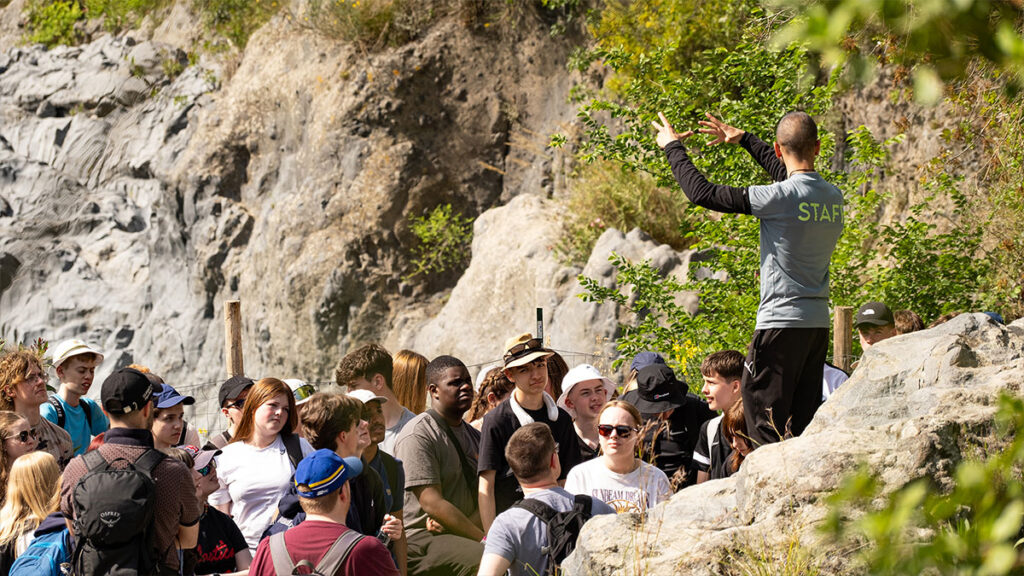
This striking island landscape offers a unique combination of physical and human geography, ideal for educational trips to Sicily. Students can investigate plate tectonics and natural hazards through hands-on experiences at Mount Etna – Europe’s highest and most active volcano – where cable car and jeep excursions reveal recent lava flows and active craters. Coastal processes and human impacts are explored in Giardini Naxos, a town shaped by both tourism and marine forces, offering valuable insight into sediment transport, coastal erosion, and sustainable management. Visit Taormina to analyse how population, tourism, and urban development have shaped the built environment over time.
Whether trekking up volcanic craters, studying fluvial landscapes like Alcantara Gorge, or investigating the impact of tourism on historic towns, geography trips to Sicily provide memorable, curriculum-rich experiences in an awe-inspiring setting.
Our Recommended Itinerary
Here’s what your trip could look like
Day 1
Flight to Sicily
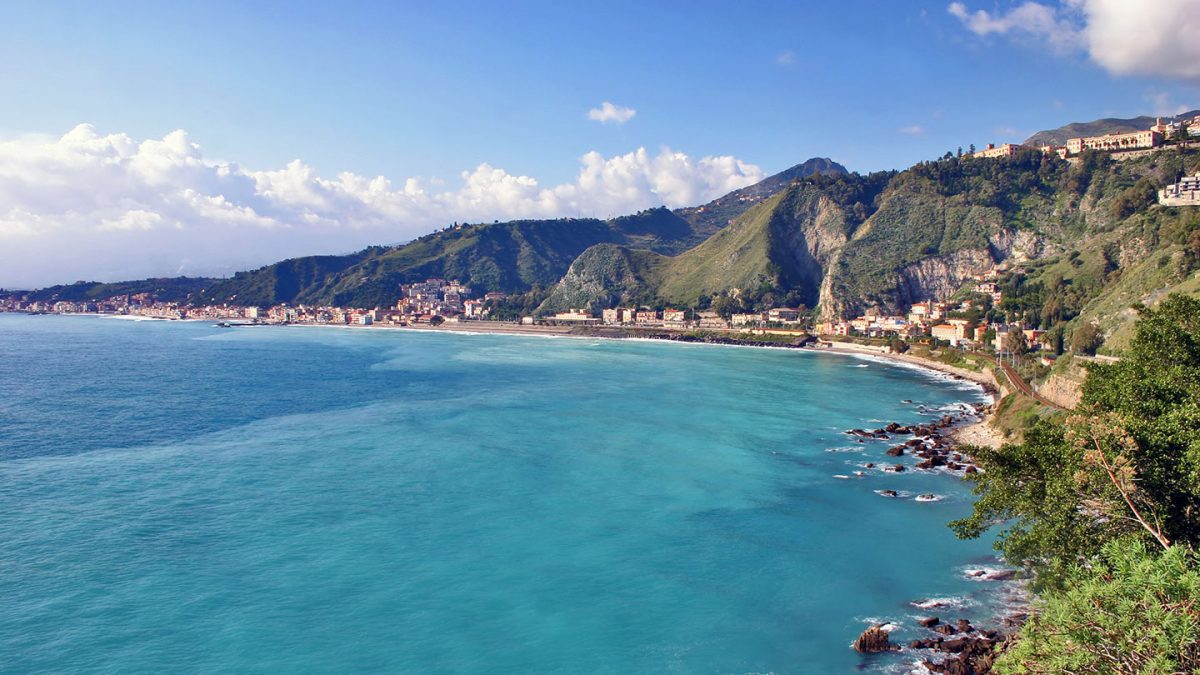
Visit the coastal town of Giardini Naxos, where students can explore coastal systems, erosion, sediment transport, and the impact of tourism on a seaside settlement
Evening meal at hotel and walk to local gelateria
Day 2
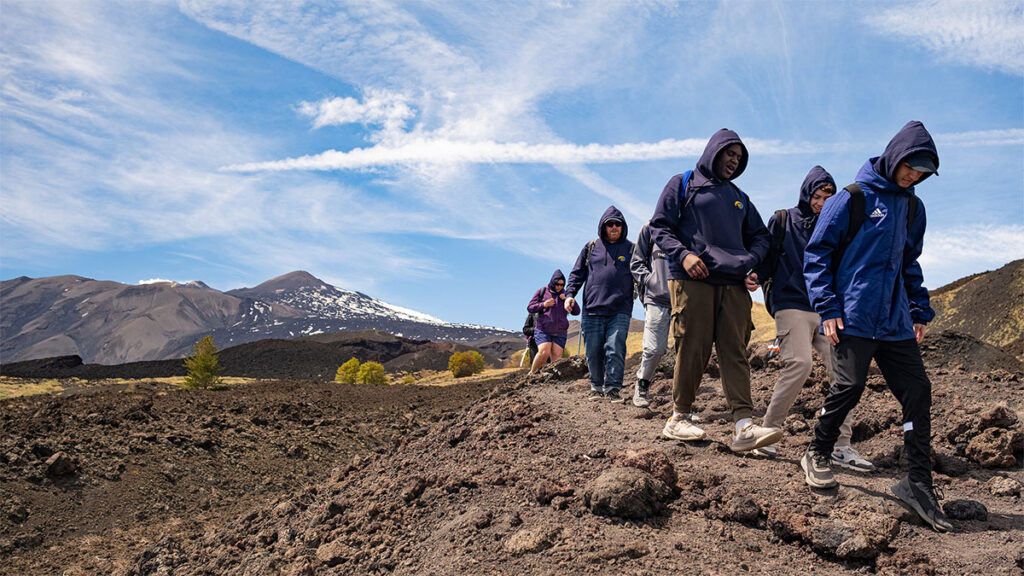
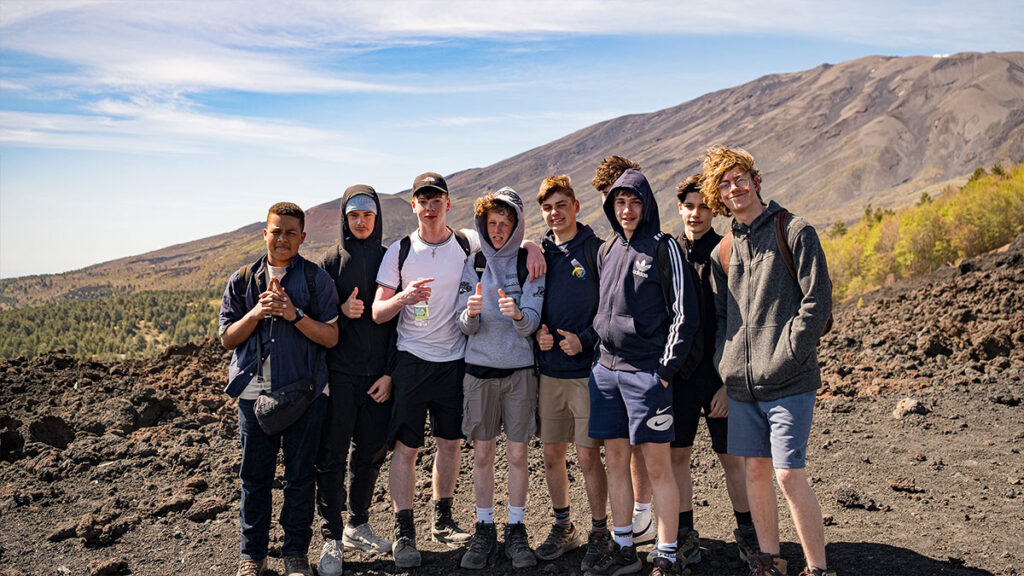
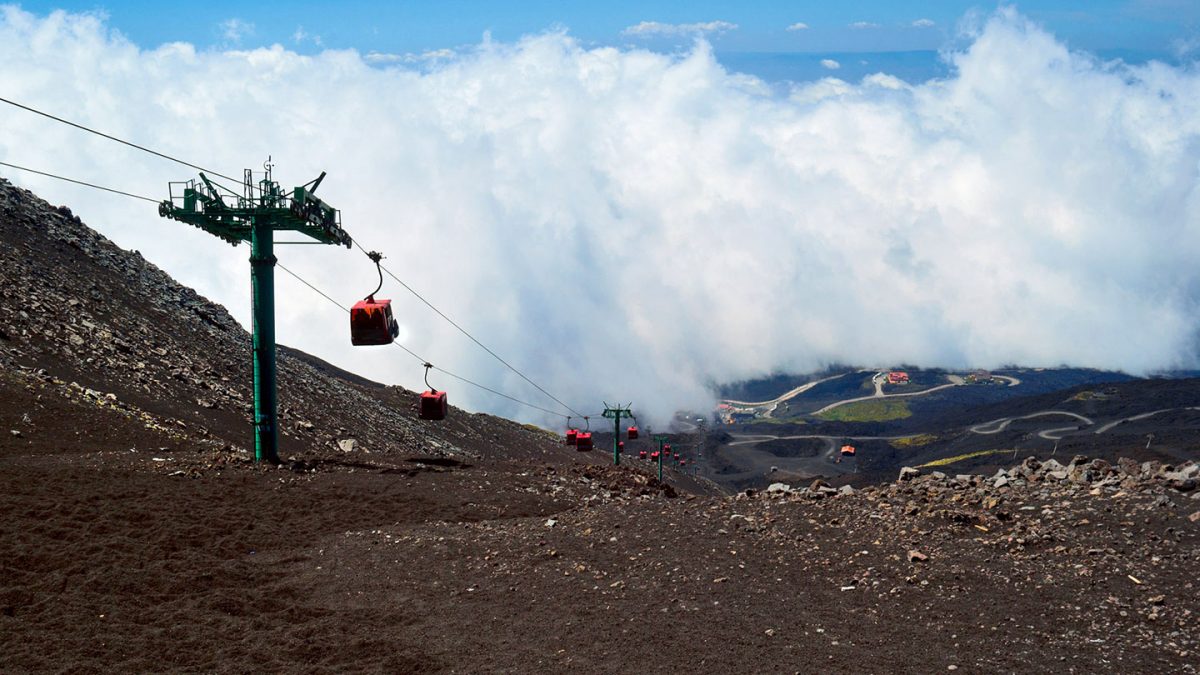
Spend the full day on Mount Etna, using the cable car and 4×4 jeep experience to ascend to 2,900m, where students can investigate volcanic landforms, plate tectonic activity, and natural hazards in a dynamic environment
Day 3
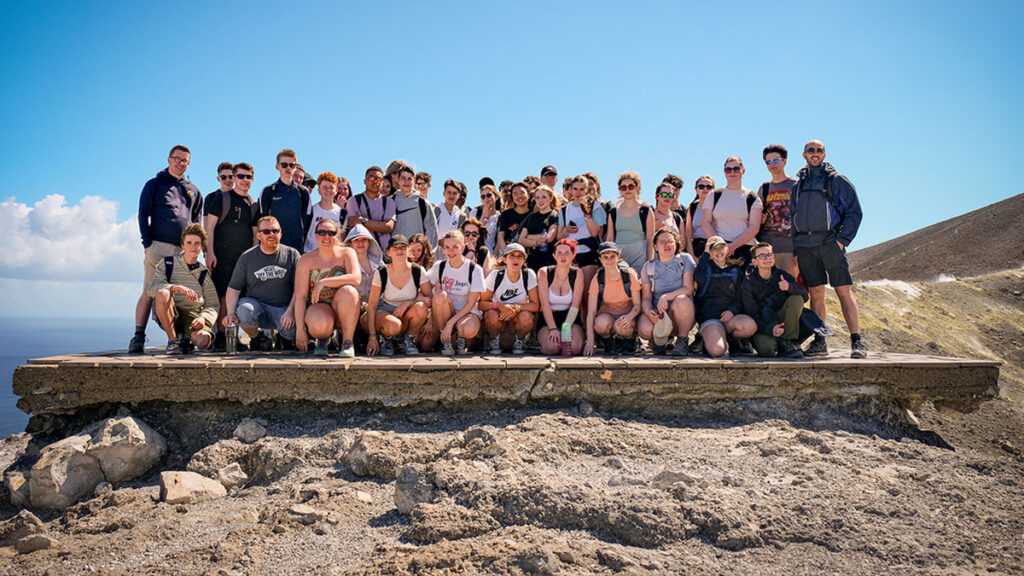
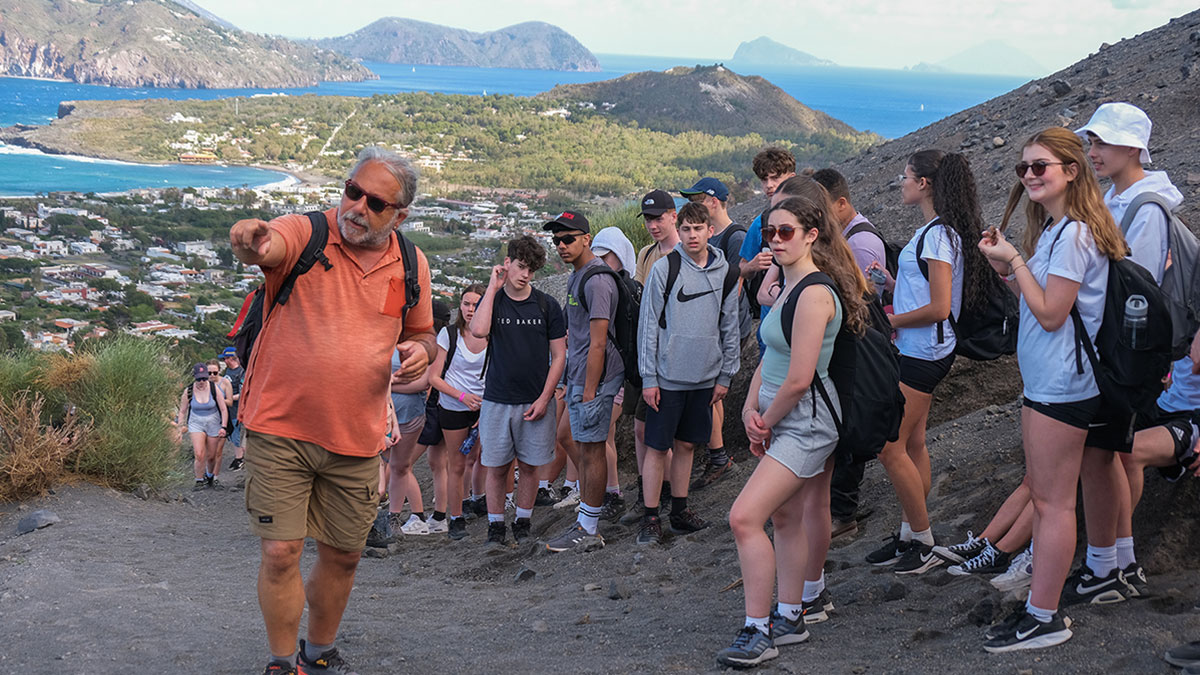
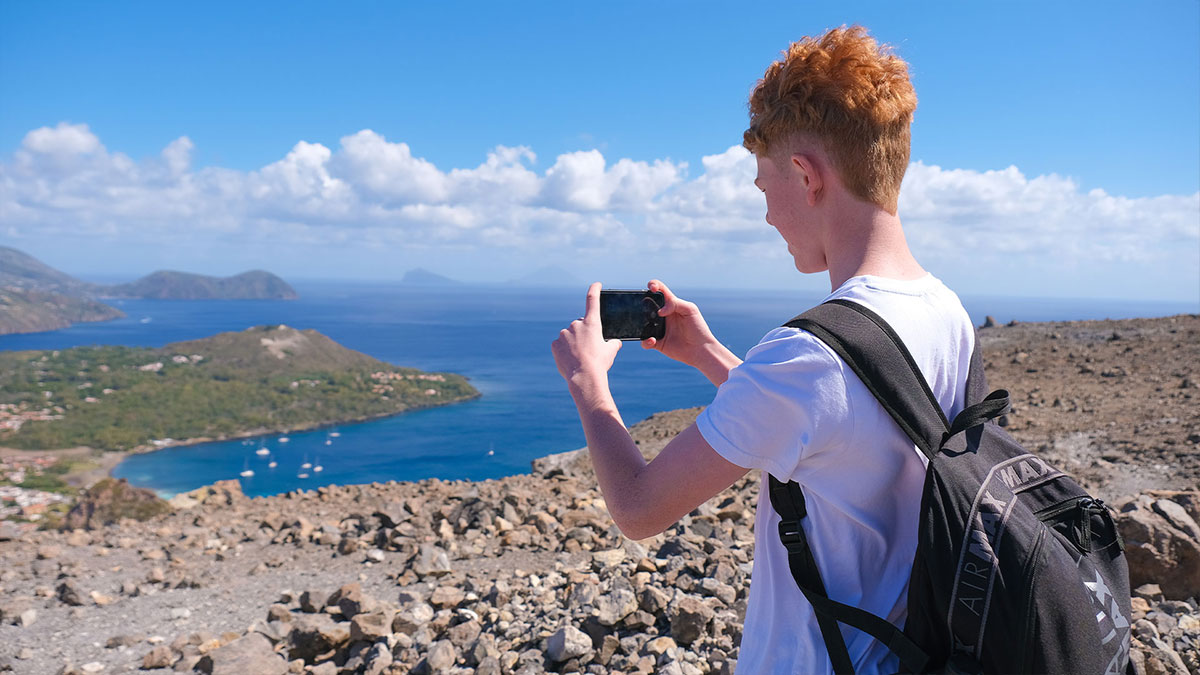
Travel to Milazzo and take the ferry to the Aeolian island of Vulcano, then meet your Alpine Guide for a trek up Gran Cratere, observing fumaroles, sulphur deposits and the ongoing weathering and erosion shaping the volcanic landscape
Relax at the black-sand beaches of Sabbie Nere and view the natural hot springs – ideal for discussions around geothermal activity, tourism, and sustainable use of natural resources
Evening meal at hotel and quiz
Day 4
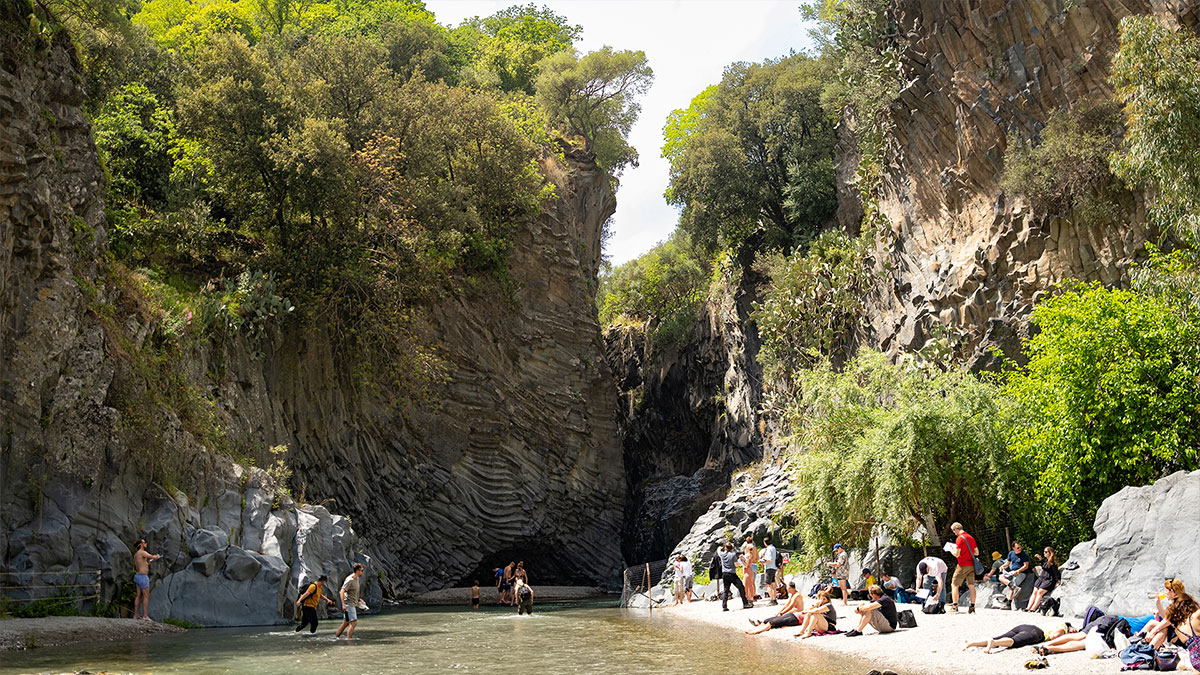
Visit Alcantara Gorge, a striking example of fluvial processes, river erosion, and volcanic rock formations, perfect for reinforcing river systems and rock cycle topics
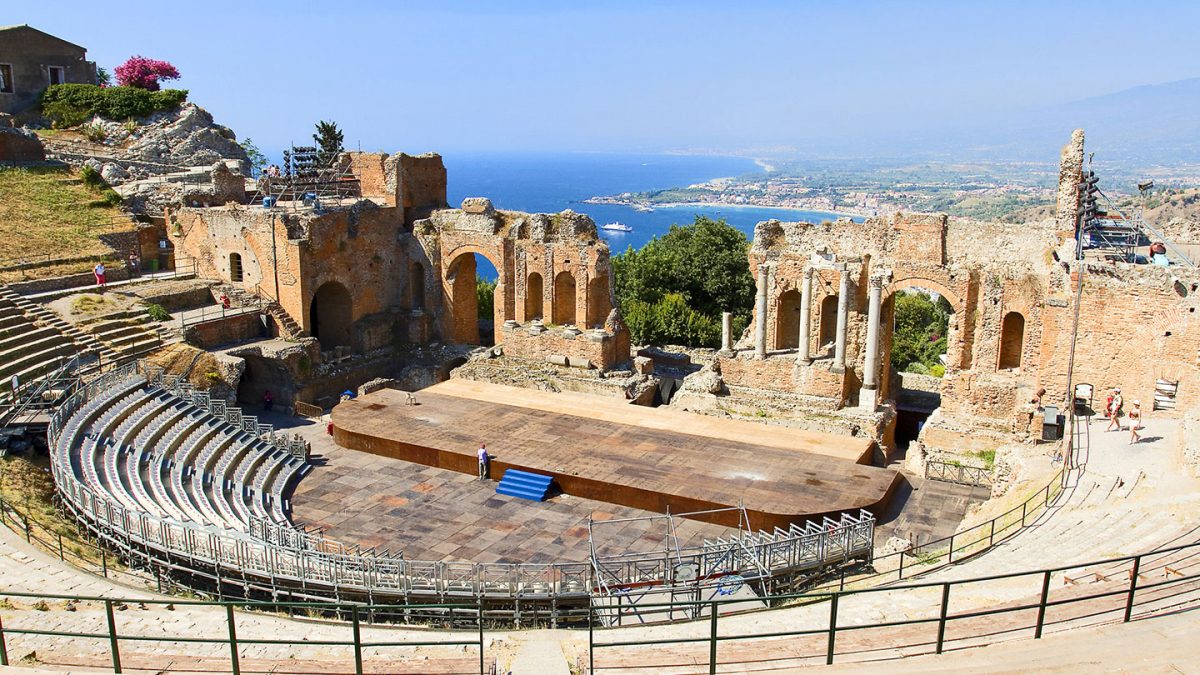
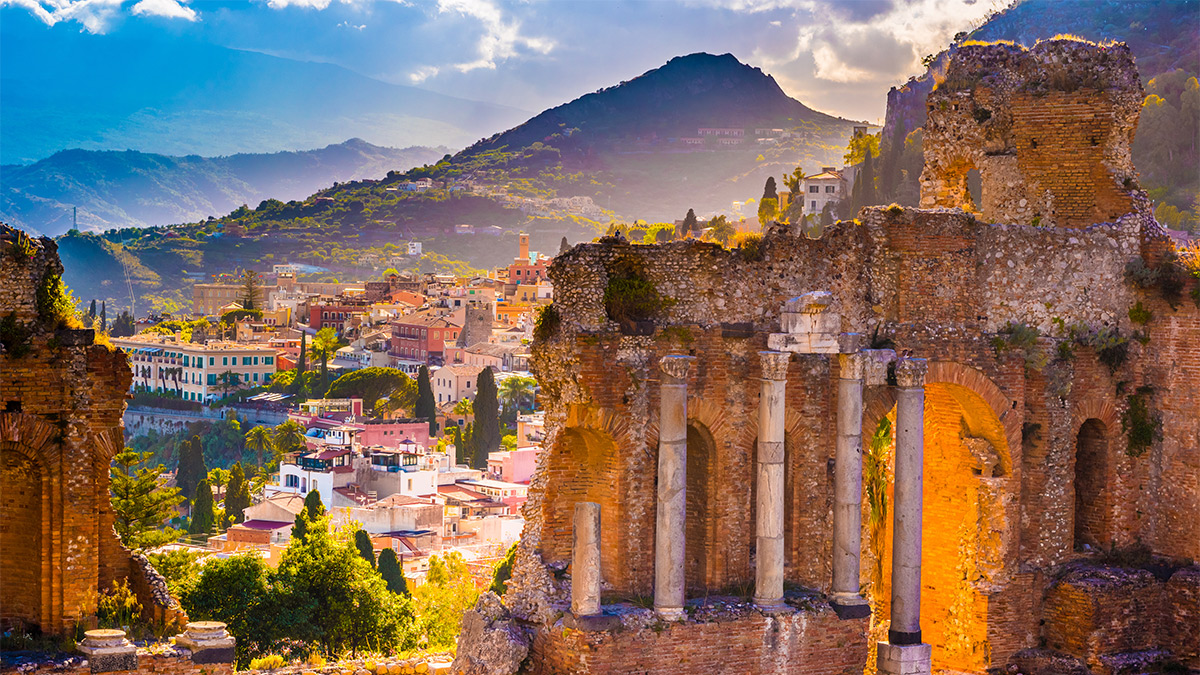
Explore the historic hillside settlement of Taormina and its Greek Amphitheatre, where students can consider changing places, urban morphology, and the relationship between topography, tourism, and population distribution
Flight home
A typical quote is based on 4 day, 3 night flight tour for 44 passengers (+4 free places) travelling October 2027 and includes, subject to availability:
- Return flights from UK to Sicily
- Coaching for the duration of your tour
- Full board accommodation
- Travel insurance
- Free staff place ratio 1:10
- 24/7 support
- Vamoos travel app & info pack
- Tailor-made itinerary
- Motorway tolls and taxes
- VAT
- Excursions:
- Return Vulcano Ferry
- Entrance to the Alcantara Gorge
Optional Extras
- Field Study Tutor
- Hoodies and Polo Shirts
Excursions in Sicily
Browse a selection of our favourite excursions
Mount Etna Cable Car &...
Mount Etna Nord
Alcantara Gorge
Guided Trek up Gran Cr...
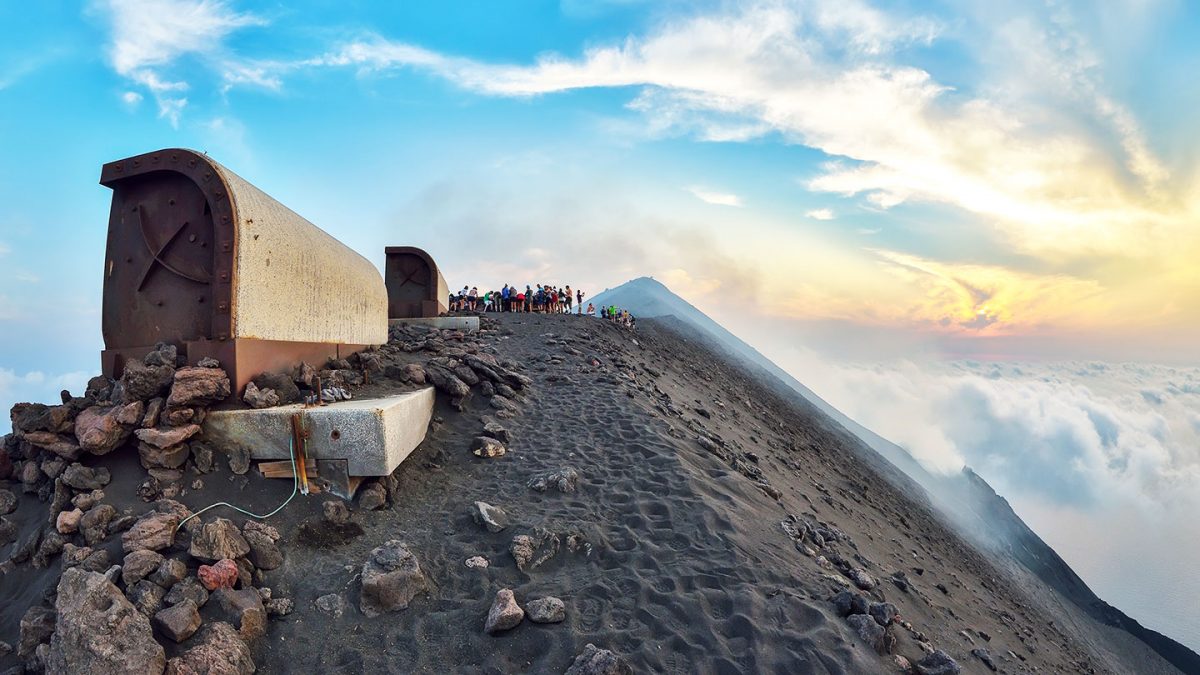
Guided Trek on Stromboli
Giardini Naxos
Lipari, Panarea & Stro...
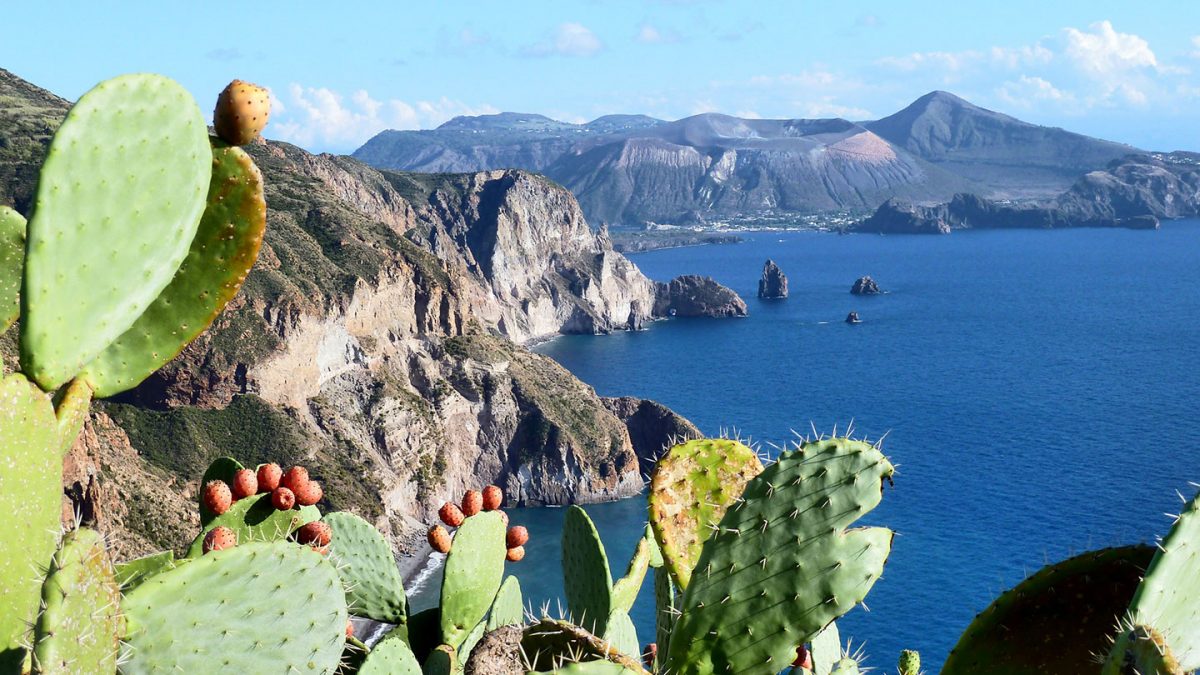
Taormina
Vulcano
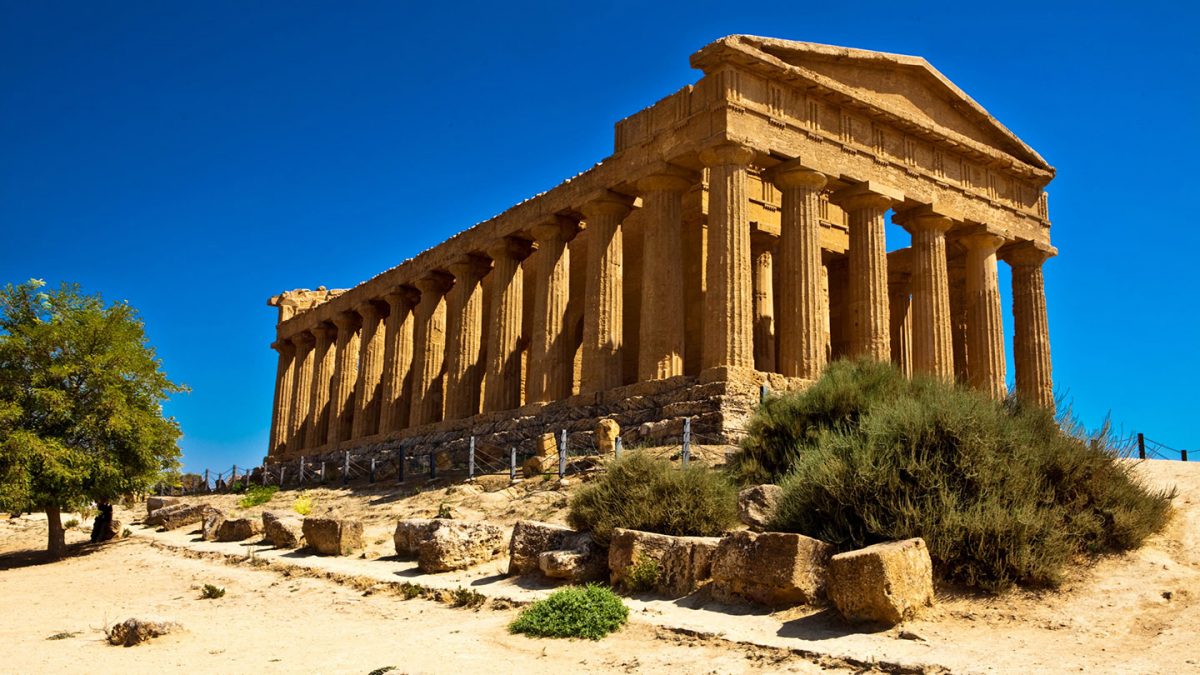
Agrigento, Valley of t...
Siracusa Archaeologica...
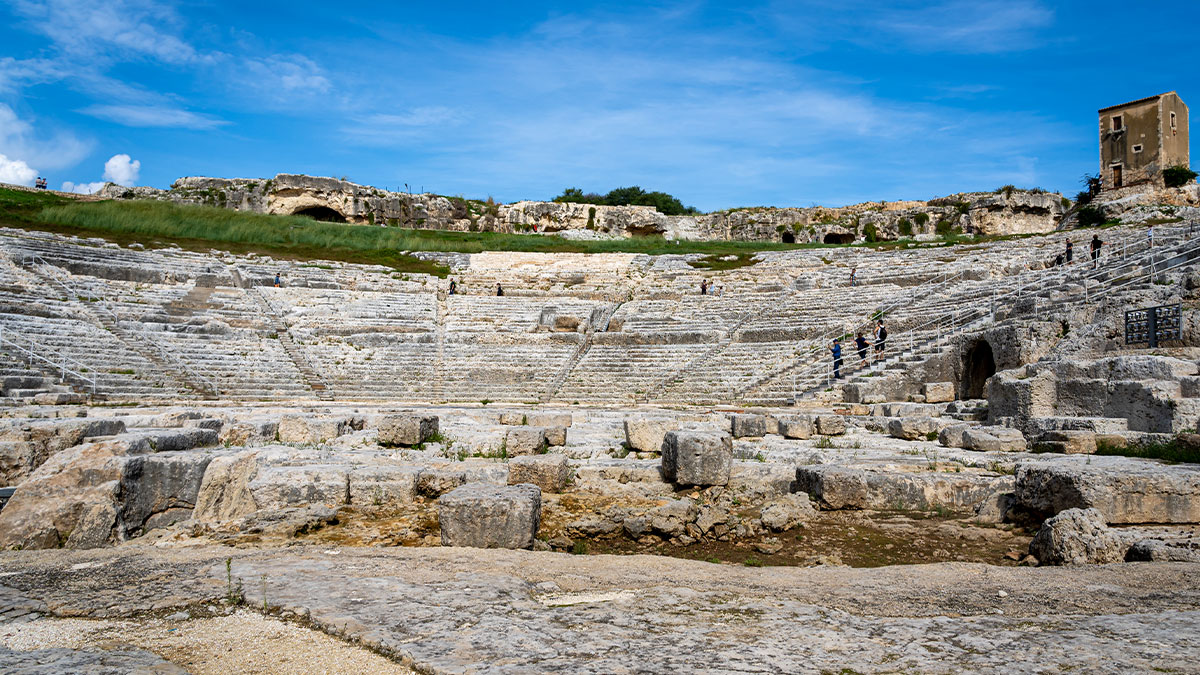
Pizza-Making, Taormina

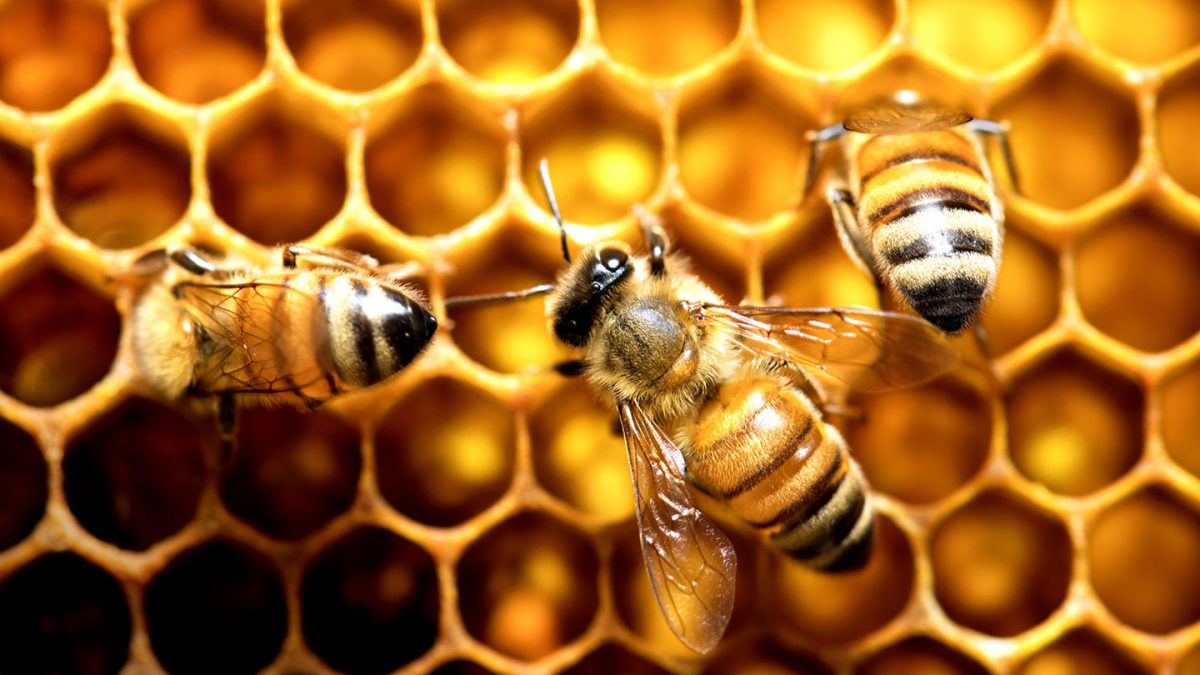
Oro d’Etna Honey Shop ...
Bowling

Trekking Sull’Etna
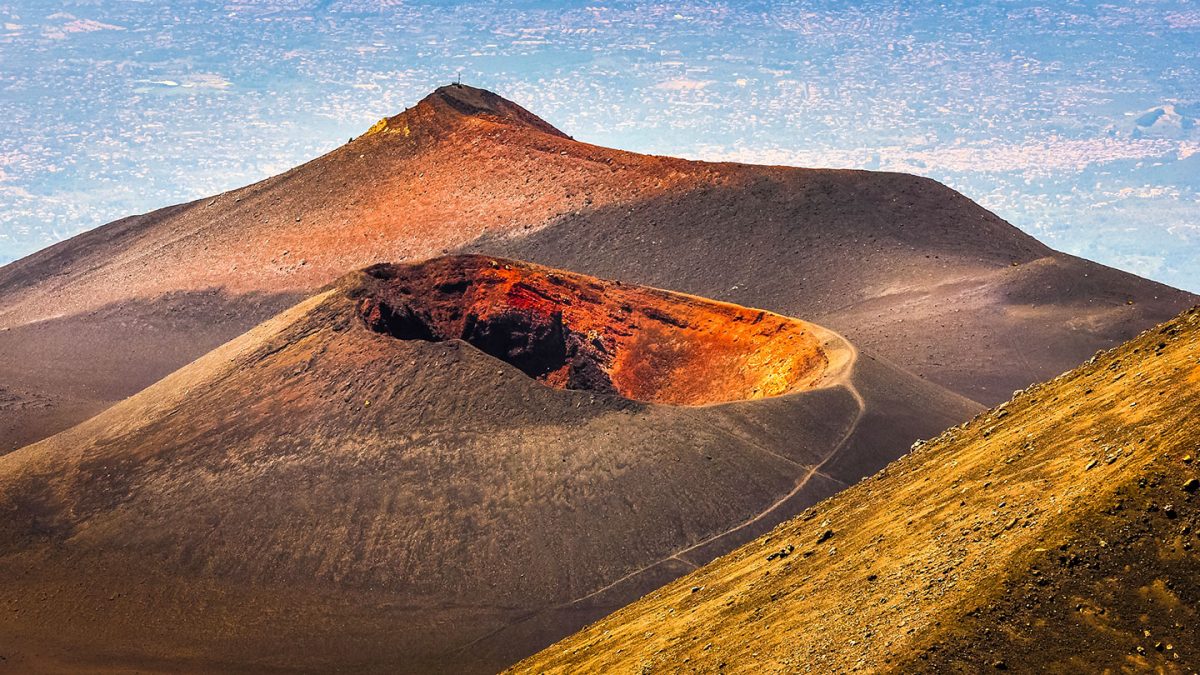
Piano Provenzana Lava ...

Accommodation
Popular places to stay in Sicily
- Situated on Sicily's East Coast, adjacent to Mount Etna
- 5 minute walk from public and private beaches
- Outdoor pool facing Mount Etna
- Wi-Fi
- Customer Feedback: "Wow, staff were blown away with the high standard of the accommodation" The Thomas Hardye School
- Outdoor pool facing Mount Etna
- Shared lounge and TV area
- Ping pong table
- Karaoke
- Mediterranean garden and terrace
- Children’s play area
- Restaurant and bar
- Gift shop
- Meeting rooms
- Wi-Fi
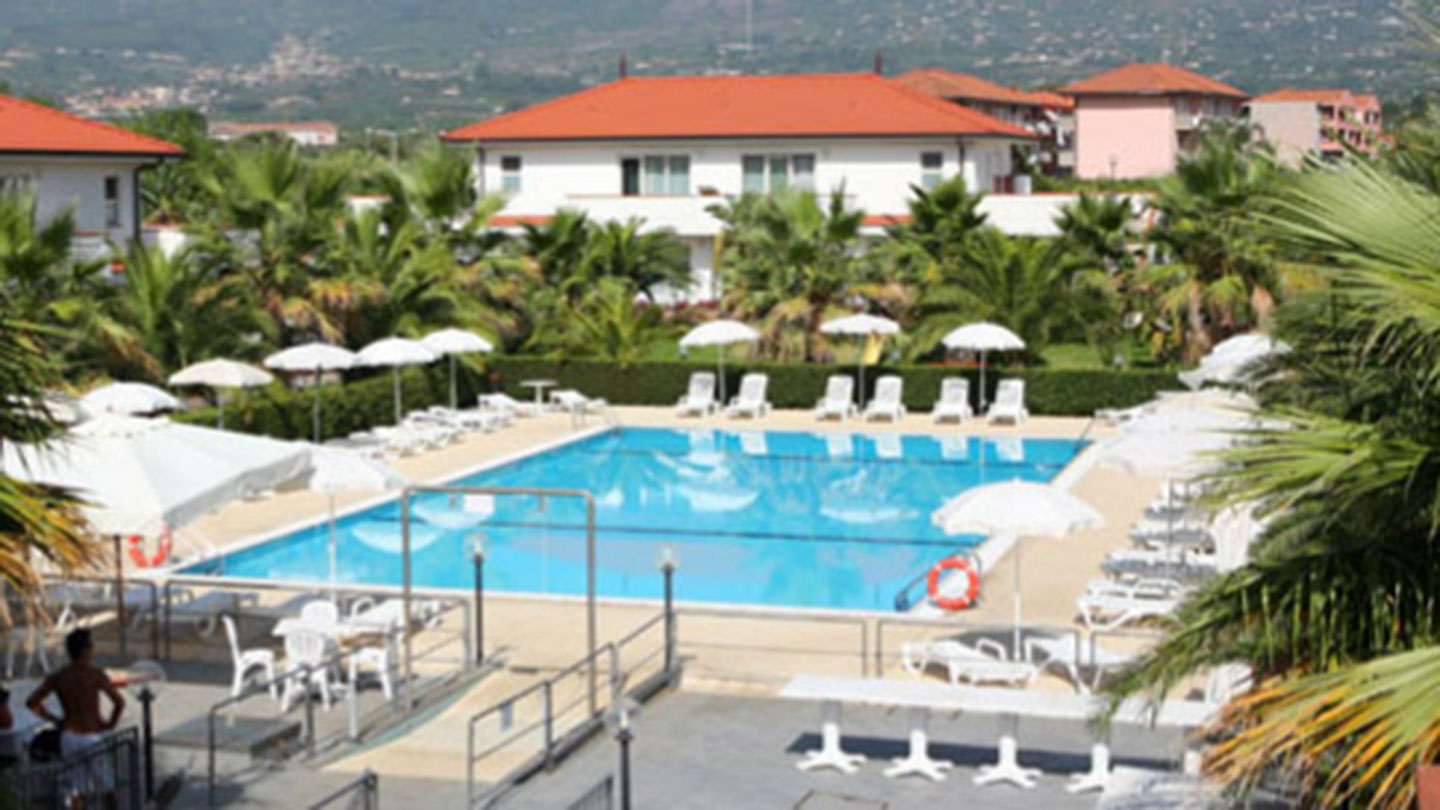
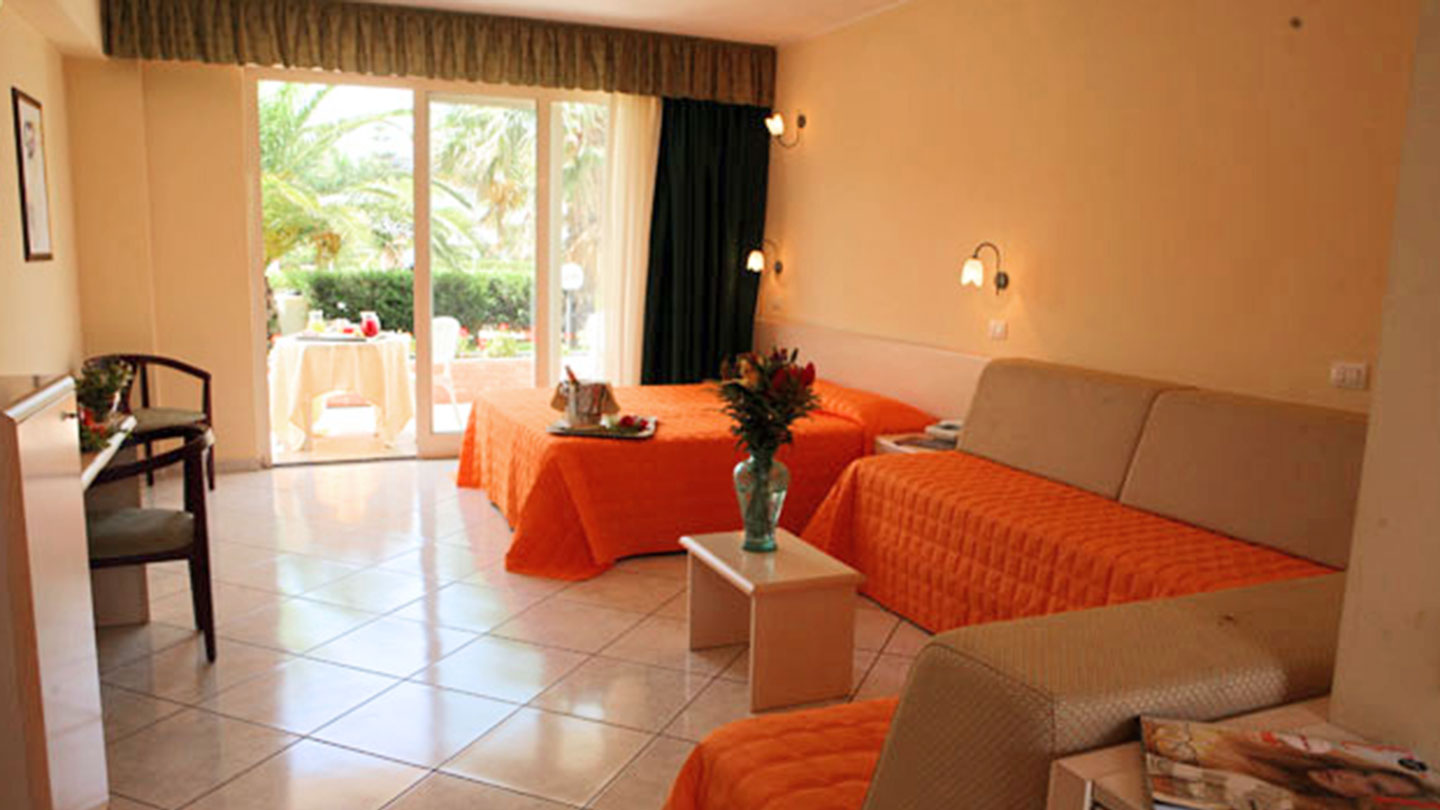
- Go for a swim in the outdoor pool
- Play a game of ping pong
- Enjoy a night of karaoke
- Soak up the sun in the Mediterranean garden and terrace
- Relax in the shared lounge and TV area
- Walk to the public and private beaches
Curriculum Information
Perfect for all ages and stages of secondary education
-
Curricular Links
- Changing Places
- Coastal Systems & Landscapes
- Geographical Skills
- Globalisation & Global Systems
- Natural Hazards
- Plate Tectonics
- Population
- River Systems & Landscapes
- Rocks, Weathering & Soil
- Rural Environments
- Tourism
- Urban Environments
- Weather & Climate
Cross Curricular Trips to Sicily!
Why not create further opportunities by opening the trip up to all students?
The chance to climb some of Europe’s most well-known volcanoes, discover ancient Greek and Roman remains and learn more about the Italian culture should be enough to tempt any student to opt for the school trip to Sicily, not just those studying geography! Combine all of this with the lure of the beautiful Mediterranean climate and it should be deal done!
Discover more about this tour
Special Feature
There’s so much more to explore…
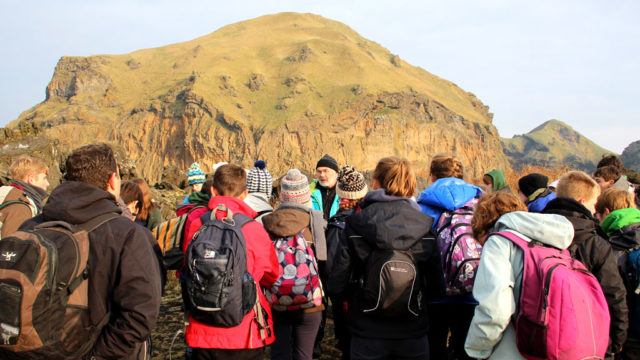
Field Study Tutors
Student trips to Sicily benefit greatly from a Field Study Tutor’s expertise, real-world insights, and geographic context.
Discover more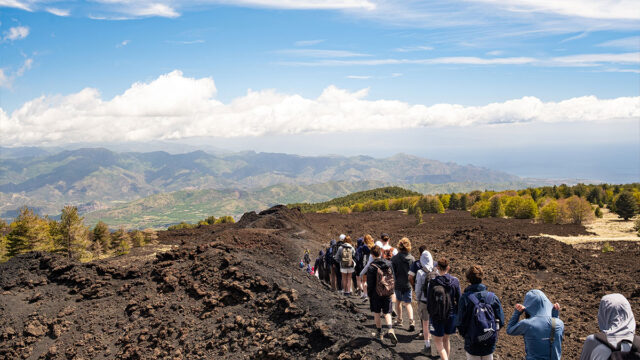
Mount Etna – A Sicilian Highlight
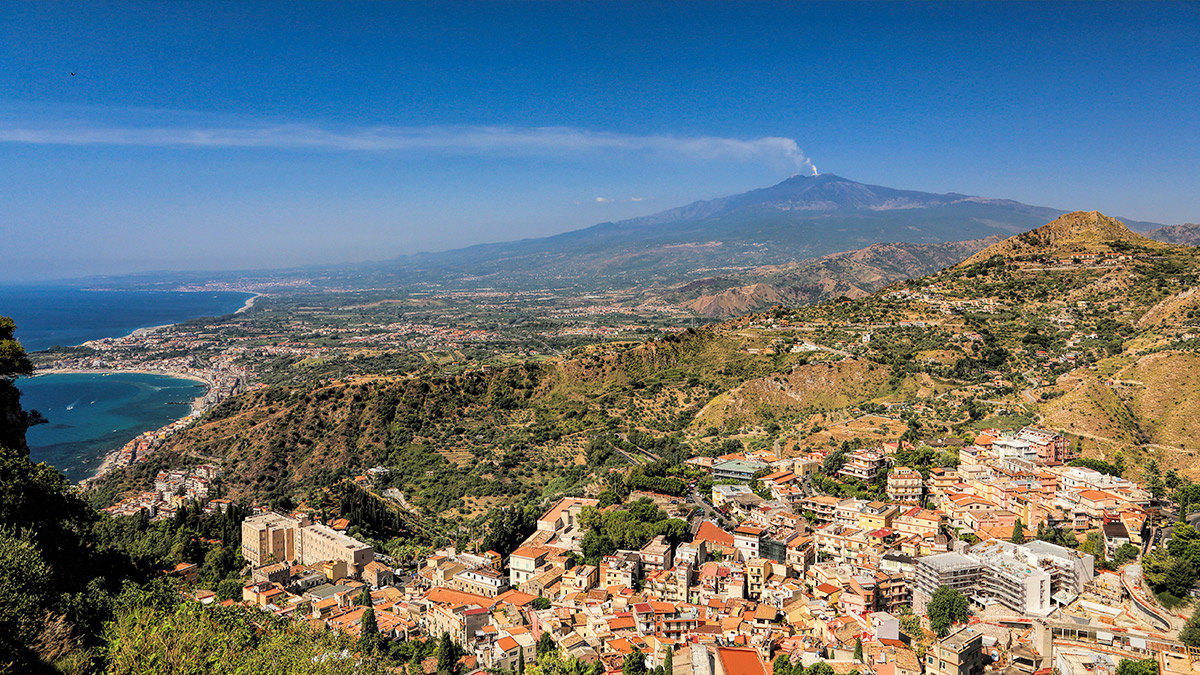
Mount Etna, Europe’s most active volcano, offers an unforgettable experience for students visiting Sicily.
Discover moreOther Destinations
Because choice is what makes life interesting
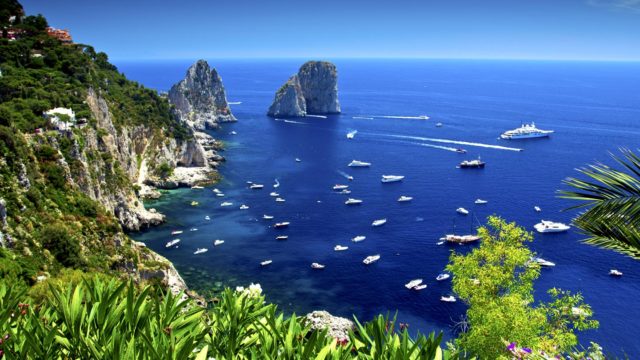
Bay of Naples
For a Mediterranean adventure without leaving the mainland try the Bay of Naples! Sunshine, gelato, volcanos, only closer…
Iceland
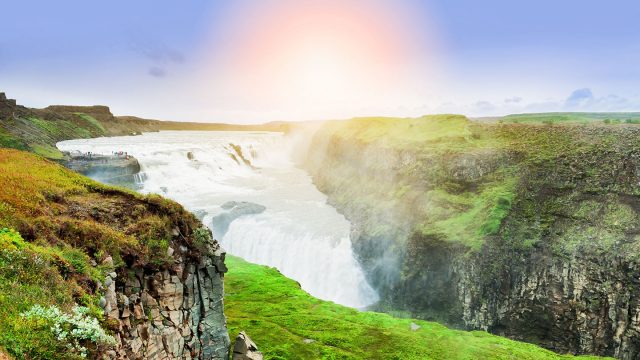
If you prefer your geography a little more intense just add some ice to your fire… think Iceland
The Azores
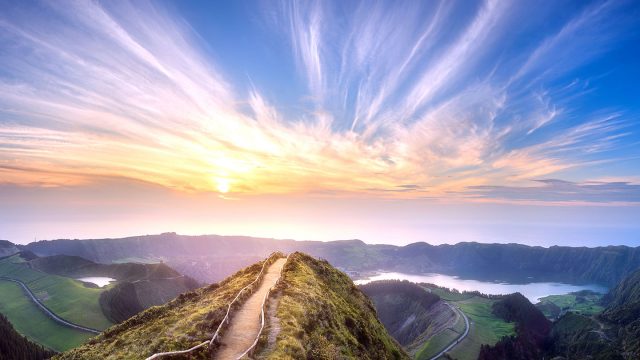
Want unforgettable landscapes and real-life examples to demonstrate energy resources, tourism, sustainability and more? Consider the Azores!
Real experiences
Why schools choose us
FAQs about this tour
Find the answers to some of our most frequently asked questions.
-
Can we climb Mount Etna?
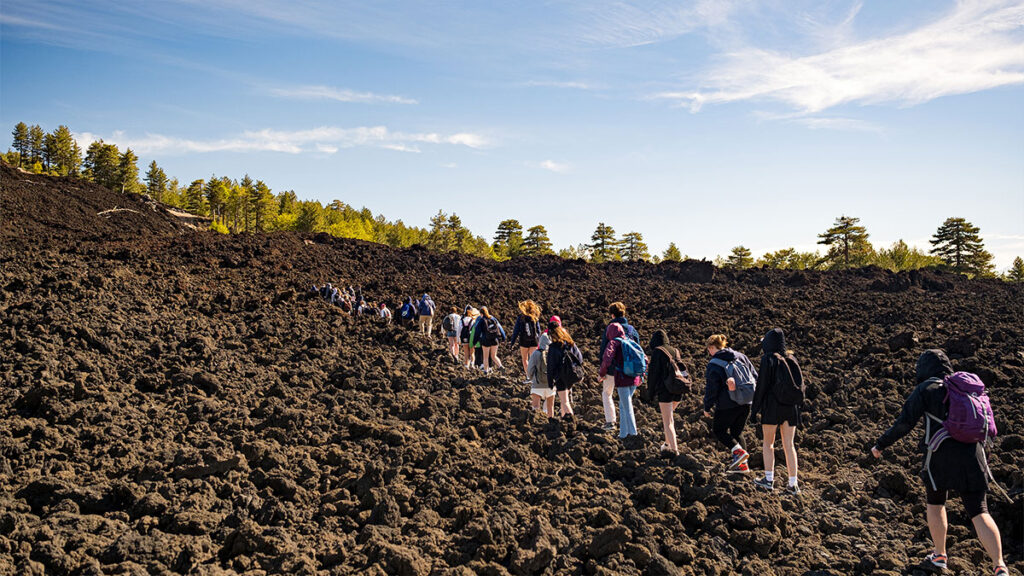
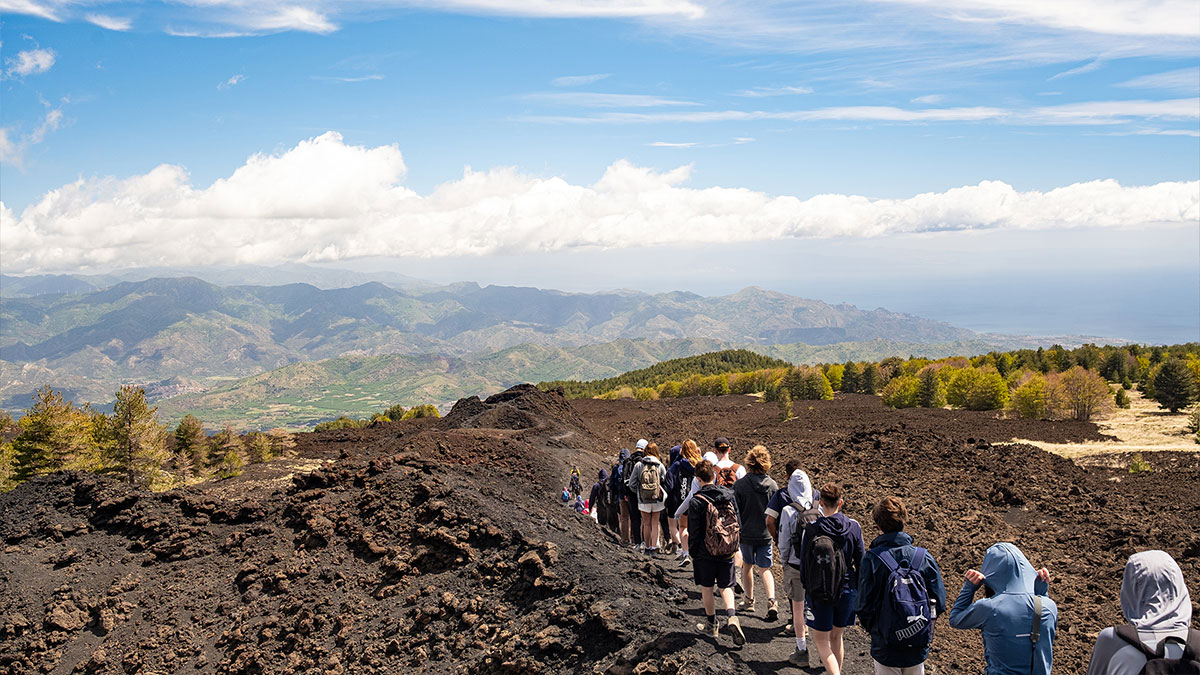
There are multiple ways to visit Mount Etna whilst in Sicily. Groups can visit the South of the Volcano where they can ascend to one of the craters at a height of 2,900m by cable car and 4×4 jeeps. To the north of the volcano you can ascend by foot, crossing some of the lava fields left by the 2002 eruption. Our expert Tour Consultants can recommend the best experience for your group.
-
What is the FCO advice in regards to safe air travel?
The FCO have provided guidelines on how you can travel safely in airports and on aircrafts at this time. Airports and airlines are committed to making your journey as safe as possible. You can read their guidance here.
-
What happens if there is a volcanic eruption whilst we are in Italy?
Throughout your tour you will have 24-hour access to a member of our team, if you do have any concerns or require any assistance. We also have a strong relationship with our agent in Italy, therefore in the event of any disruption to your tour we will liaise with them promptly to ensure that they can offer us all the local support and assistance we need. This local knowledge and direct communication means that in the event that you are directly affected by an eruption we will be on hand to offer a calm, efficient evacuation to safety, if required. We have access to accommodation in different locations, should your group need to be relocated.
Should your return be affected we will be on hand to offer support and assistance until your group is safely back in the UK. We have 24-hour contact available with the majority of airlines and we have experienced the high level of support they offer during the repatriation process. Please be assured that your tour is in safe hands and that the safety of our groups is our top priority. Additionally, please do not hesitate to contact us if you have any further queries or require any additional information at this stage.
-
What can geography students expect to see and study on a trip to Sicily?
Giardini Naxos – Coastal Processes and Tourism
At Giardini Naxos, students study coastal systems, including wave erosion, transportation and deposition. They also examine how tourism shapes coastal towns, exploring both development pressures and strategies for sustainable management.
Mount Etna – Volcanic Activity and Hazards
Mount Etna offers a chance to see Europe’s most active volcano up close. Students can observe recent lava flows, volcanic craters, and landforms, supporting studies of plate tectonics, volcanic hazards, and the interaction between people and active environments.
Aeolian Islands – Volcanic Landscapes
On islands such as Vulcano, students trek across volcanic craters, see fumaroles and sulphur deposits, and visit black sand beaches. These features provide vivid examples of geothermal activity, volcanic landscapes, and coastal processes shaped by volcanism.
Alcantara Gorge – Fluvial Landforms
The Alcantara Gorge demonstrates how rivers carve through volcanic rock. Students investigate erosion, river processes, and canyon formation, while considering the influence of rock type on landscape development.
Taormina – Human Geography and Tourism
In Taormina, students explore human geography through its hilltop location, historic amphitheatre, and tourism economy. The town illustrates how settlement, topography, and economic activity are closely linked.
-
When is the best time of year to take a school trip to Sicily?
Spring (April-to-June)
Spring is one of the top choices. From about April through to early June, the weather is mild and generally pleasant: warm enough to do outdoor fieldwork, hikes, volcano visits, etc., without the extreme heat. Crowds are smaller than in peak summer, which means easier access to sites and fewer logistical headaches.
Autumn / Early Fall (September-October)
Another excellent window is September through October. The sea is still warm, the heat is less intense, and tourist numbers drop off, so it becomes more comfortable for long days outdoors, site visits (e.g. Mt Etna, archaeological ruins), and travelling between locations. It also means better value for accommodation and easier movement around towns and transport.
-
What should students pack for a geography field trip to Sicily?
Clothing
- Lightweight layers – T-shirts and long sleeves for sun protection.
- Comfortable walking trousers/shorts – avoid heavy jeans; quick-dry fabrics are best.
- Warm layer – a fleece or jumper for cooler evenings or higher elevations (e.g. Mount Etna).
- Waterproof jacket – essential for sudden showers or wind.
- Sturdy walking shoes/boots – with good grip for rocky and volcanic terrain.
- Hat & sunglasses – for strong Mediterranean sun.
- Swimwear & towel – for beach or hot spring visits.
Fieldwork Essentials
- Small backpack/daypack – for carrying daily gear, water, and notes.
- Refillable water bottle – staying hydrated is crucial in warm weather.
- Notebook & pencils – for field sketches and observations (pencils work better in damp or windy conditions).
- Clipboard & ruler – handy for fieldwork tasks.
- Map/compass – if required by teachers for navigation activities.
Extras & Practical Items
- Sun cream & insect repellent – the Sicilian sun is strong, and insects may be an issue near water.
- Light scarf/buff – useful against dust or wind.
- Camera/phone (with charger & adapter) – for photos and recording field data.
- Snacks – high-energy snacks for long days outdoors.
- Travel adaptor – Sicily uses European plugs (Type C, F, or L).
- Personal medication – plus basic first aid items if advised.
A Sicilian Stunner – 11 Incredible Excursions That Need to Be Experienced!
Mount Etna – the Roaring Ancient of Sicily
Meet The Incredible Cath Rule!
Travel in safe hands
Your safety is of the utmost importance to us and we monitor the safety aspects of all of our tours to ensure you have a memorable experience for all the right reasons.
Discover More