We’re celebrating, having won the School Travel Awards – Best Large School Tour Operator award!

More Than Just a Language Trip: The Benefits of Cross-Curricular School Trips

Last updated: Sep 11th, 2026


A school trip doesn’t always have to belong to just one department.

While a school language trip might traditionally be organised by the MFL department, there are opportunities to bring other subjects along for the journey too.

This is the idea behind a cross-curricular school trip: bringing students and teachers from different departments together to share an educational experience, while allowing each subject to make the most of the destination in its own way.

And when you choose the right destination, the possibilities are extensive.

One destination, multiple subjects.

French, Art, Science and Maths in Paris 

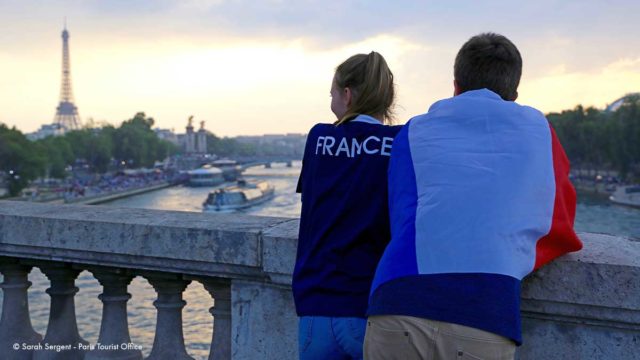
Paris is a great example of how one destination can bring different departments together, with French, Art, Science and Maths students all getting something different from the same trip. 

For the French department, students can put their classroom learning into practice in an authentic French-speaking environment. Ordering food, navigating the city, reading signs and interacting with local people all provide opportunities to use French beyond the classroom. 

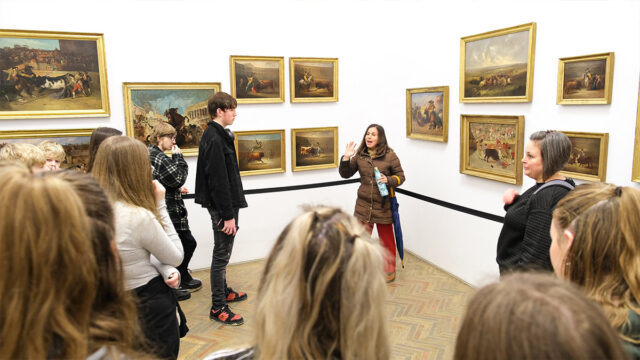
For Art students, Paris offers an abundance of inspiration. A visit to the Louvre, Musée Picasso or Musée de l’Orangerie can bring artists, movements and techniques to life, while exploring the city’s architecture and public spaces gives students the opportunity to observe art and design in context.

But the cross-curricular possibilities don’t stop there. 

For Science students, Paris provides opportunities to explore scientific discovery and innovation. Visits such as the Cité des Sciences et de l’Industrie can give students the chance to engage with scientific ideas and exhibitions in an environment beyond their usual classroom setting. 

And for Maths students, the city itself can become a practical learning resource. From exploring scale, symmetry and geometry in architecture to considering measurement, data and spatial awareness, Paris provides plenty of opportunities to spot mathematical concepts in the real world. 

The important thing is that all four departments can travel together while following their own learning objectives. 
One City, Two Departments and Two Different Perspectives. 

Berlin provides another excellent example. 

A school trip to Germany can easily become a joint Language and History experience, with students developing their German while exploring some of the most significant events of Germany’s recent past. 

Students can visit sites connected to the Berlin Wall, explore the Brandenburg Gate and discover museums and historical attractions. For German students, these experiences provide context for the language and culture they are studying. For History students, they provide an opportunity to explore topics such as division, reunification and life in 20th-century Germany. 

The result is a trip where students can see how language, history, politics and culture are interconnected. 

And because both departments are travelling together, students can learn from one another too.

Barcelona: Bringing Language and Food Technology Together 

Cross-curricular trips don’t have to stop at traditional academic subjects. 

Barcelona offers opportunities for language students to practice Spanish while exploring Spanish food and culture.  For the MFL department, this provides authentic opportunities to use food-related vocabulary and communicate in Spanish. 

For Food Technology, however, the same experience could support learning about ingredients, cooking methods, regional cuisine and food traditions. 

Students don’t need separate trips to experience these opportunities. They can travel together and explore the same destination through their own subject areas.

The Benefits for Teachers 

The benefits of cross-curricular travel aren’t limited to students. 

For schools, bringing departments together can make it possible to create a larger, shared educational experience rather than organising several separate trips. 

Teachers can collaborate when planning the itinerary, identifying which visits will be most valuable for each department and where learning objectives overlap. 

A museum visit, for example, might be relevant to History and Art. A market could support both MFL and Food Technology. A walking tour might provide opportunities for Geography, History and language learning. 

Rather than planning separate itineraries, departments can work together to build a trip where each element has a clear educational purpose.

Students See Subjects Differently 

There is another benefit to cross-curricular trips that can be easy to overlook. 

In the classroom, subjects can sometimes feel separate. Maths happens in one lesson. History happens in another. Languages happen somewhere else. Travel doesn’t work like that. A single location can involve all of these areas at once. 

The real world doesn’t divide itself into school subjects – and educational travel gives students the opportunity to experience that for themselves. 

Ready to Bring Your Departments Together?

At Rayburn Tours, we will create you a tailor-made itinerary that works across departments, with meaningful experiences and subject-specific learning opportunities built into your trip. 

Explore our educational trips and discover where your departments could learn together. 

Contact us

Related Articles

View or the Eiffel Tower

Combine Language Trips with Cross-Curricular Learning!

Did you know? Our school language trips can be combined with subjects like history, art, and geography – this is the BEST choice to make,…

How Can I Prepare Students for a School Language Trip?

The success of a school language trip often depends on how well students are prepared before they go. Here are some practical and effective ways…

School Language Trip to Seville

Do School Language Trips Really Improve Language Skills?

In this blog, we discover how school language trips improve language skills and help students understand culture outside the classroom.